

TL;DR:
- Desert fashion emphasizes breathable fabrics, loose silhouettes, and earthy colors for climate adaptation.
- It integrates cultural traditions with regional influences like boho, western, and Navajo motifs.
- Sustainable practices focus on natural fibers, durability, and regional craftsmanship for authentic, lasting style.
Most people picture desert fashion as shorts, sandals, and as little fabric as possible. That image misses the point entirely. Desert fashion, also known as desertcore or desert chic, is an aesthetic inspired by desert landscapes and climates, and it’s far more layered than bare skin and light linen. True desert style is a blend of climate intelligence, cultural identity, and personal expression. Whether you’re drawn to Arizona’s dusty canyons or its vibrant streetwear scene, understanding the full picture of desertcore will help you dress smarter, look more authentic, and feel genuinely connected to the landscape you love.
Table of Contents
- What makes desert fashion unique?
- The role of fabrics: Why material matters in the desert
- How to wear desert fashion in Arizona
- Sustainability and the future of desertcore fashion
- A new perspective: What most desert fashion guides miss
- Shop desert-inspired Arizona apparel
- Frequently asked questions
Key Takeaways
| Point | Details |
|---|---|
| Desertcore means more | Desert fashion fuses aesthetics, functionality, and local culture, not just bare skin. |
| Right fabrics matter | Linen and cotton outperform synthetics in Arizona’s heat and sun while looking great. |
| Layer for comfort | Flexible layers allow for stylish adaptation from blazing days to chilly desert nights. |
| Local meets sustainable | Choosing natural, Arizona-inspired styles supports sustainability and community creativity. |
What makes desert fashion unique?
With the misconceptions dispelled, let’s break down what actually defines desert fashion. Desertcore isn’t just a mood board aesthetic you scroll past on social media. It’s a functional, culturally rich style system built around the realities of living in or loving the desert.
Desert fashion features loose silhouettes, breathable fabrics, and earthy color palettes. These aren’t just stylistic choices. They’re climate solutions. Loose cuts allow air to circulate around the body. Breathable fabrics pull moisture away from the skin. Earthy colors reflect the surrounding landscape rather than fighting it.
The core visual elements that define desertcore include:
- Color palette: Terracotta, sand neutrals, sage green, sunset orange, rust, and warm beige
- Fabrics: Linen, cotton, and natural fiber blends
- Silhouettes: Wide-leg pants, long flowy dresses, oversized shirts, and tunics
- Accessories: Woven hats, leather sandals, layered turquoise jewelry, and bandanas
- Patterns: Geometric prints, Southwestern motifs, and hand-painted or block-print details
Arizona adds its own distinctive spin to all of this. Where global desertcore draws from Arab and North African traditions, Arizona’s version pulls from boho, western, and cowboy influences. You’ll see fringe details, bolo ties, hand-tooled leather, and Navajo-inspired geometric patterns woven into everyday looks. It’s a style that carries local pride without being a costume.
For a closer look at how this plays out in real outfits, browsing desert-inspired outfit examples shows you just how versatile the aesthetic can be across seasons.
To understand the contrast between desertcore and typical fast fashion, here’s a quick side-by-side comparison:
| Element | Desert fashion | Typical fast fashion |
|---|---|---|
| Fabrics | Linen, cotton, natural fibers | Polyester, nylon, synthetic blends |
| Purpose | Climate function + style | Trend-driven appearance |
| Colors | Earthy, muted, nature-inspired | Bold, seasonal, trend-based |
| Silhouettes | Loose, flowing, layered | Fitted, structured, body-conscious |
| Longevity | Durable, timeless pieces | Fast-cycle, replaced seasonally |
Desertcore has been gaining momentum on social platforms, particularly among communities that appreciate slow fashion and cultural authenticity. Its roots in Arab and African desert traditions give it a depth that many trend cycles lack. When you wear desert-inspired clothing that genuinely connects to Arizona’s landscape and culture, you’re participating in something with real history behind it.
“The desert has always known how to dress itself. Earthy, layered, intentional. True desertcore fashion simply takes notes.”
The role of fabrics: Why material matters in the desert
Now that you recognize the style’s core identity, it’s key to understand what makes desert clothing work in real life: the fabric. Fabric choice in desert climates isn’t a minor detail. It can be the difference between a comfortable afternoon outdoors and a genuinely uncomfortable experience.
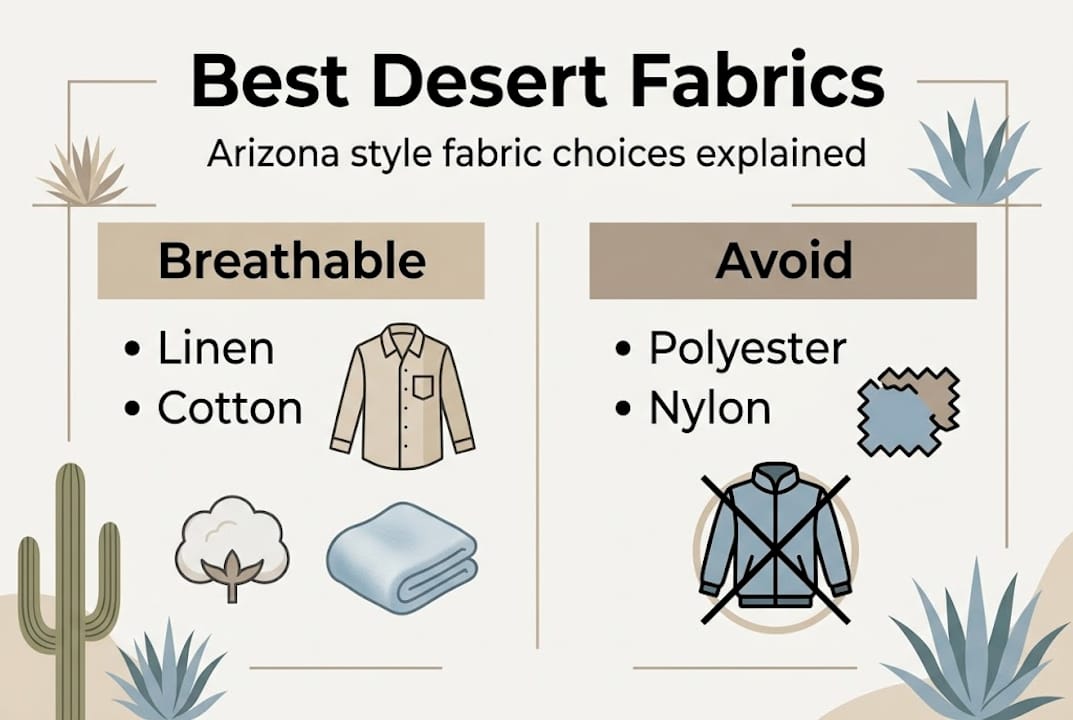
Linen is the gold standard for desert wear. Linen absorbs up to 20% moisture without feeling wet, which keeps you cool and dry even when temperatures climb. Arizona has July averages reaching 107°F with more than 300 sunny days per year, making fabric selection a genuine health and comfort issue, not just a style preference.
Cotton is another reliable choice. It breathes well, softens with washing, and holds up in the dry desert air without static or irritation. Ring-spun cotton, in particular, creates a smooth, dense weave that feels premium against sun-sensitized skin.
Synthetic fabrics are a different story. Polyester and nylon trap heat, hold onto moisture in uncomfortable ways, and can cause skin irritation in high temperatures. They may work fine in air-conditioned spaces, but out in the Arizona sun, synthetics work against you.
Here’s a quick fabric comparison to help guide your choices:
| Fabric | Breathability | Moisture management | Best for desert use |
|---|---|---|---|
| Linen | Excellent | Absorbs up to 20% without feeling wet | Yes, top choice |
| Cotton | Very good | Absorbs and releases naturally | Yes, especially ring-spun |
| Bamboo blends | Good | Moisture-wicking, soft | Yes, with caveats |
| Polyester | Poor | Traps heat and sweat | No |
| Nylon | Poor | Retains moisture, causes heat buildup | No |
UPF (Ultraviolet Protection Factor) is another factor worth considering. Many desert fashion pieces are specifically constructed with tightly woven natural fabrics that block UV rays more effectively than loose-knit synthetics. Long sleeves in a breathable linen or cotton actually protect your skin better than bare arms under direct Arizona sun.
For a deeper look at how fabric choices for desert living shape everyday style decisions in Arizona, the connection between material science and fashion becomes very clear.
You can also find helpful guidance on breathable fashion materials that work across different desert climates and body types.
Pro Tip: When shopping for Arizona summer wear, look for natural fiber content labels. A linen-cotton blend of at least 60% natural fiber will outperform full synthetics in both comfort and sun protection on hot days.
How to wear desert fashion in Arizona
Knowing your materials is vital, but how do you assemble an outfit that’s stylish, authentic, and functional for the Arizona desert? This is where many people get stuck, especially if they’re used to dressing for coastal or urban climates.
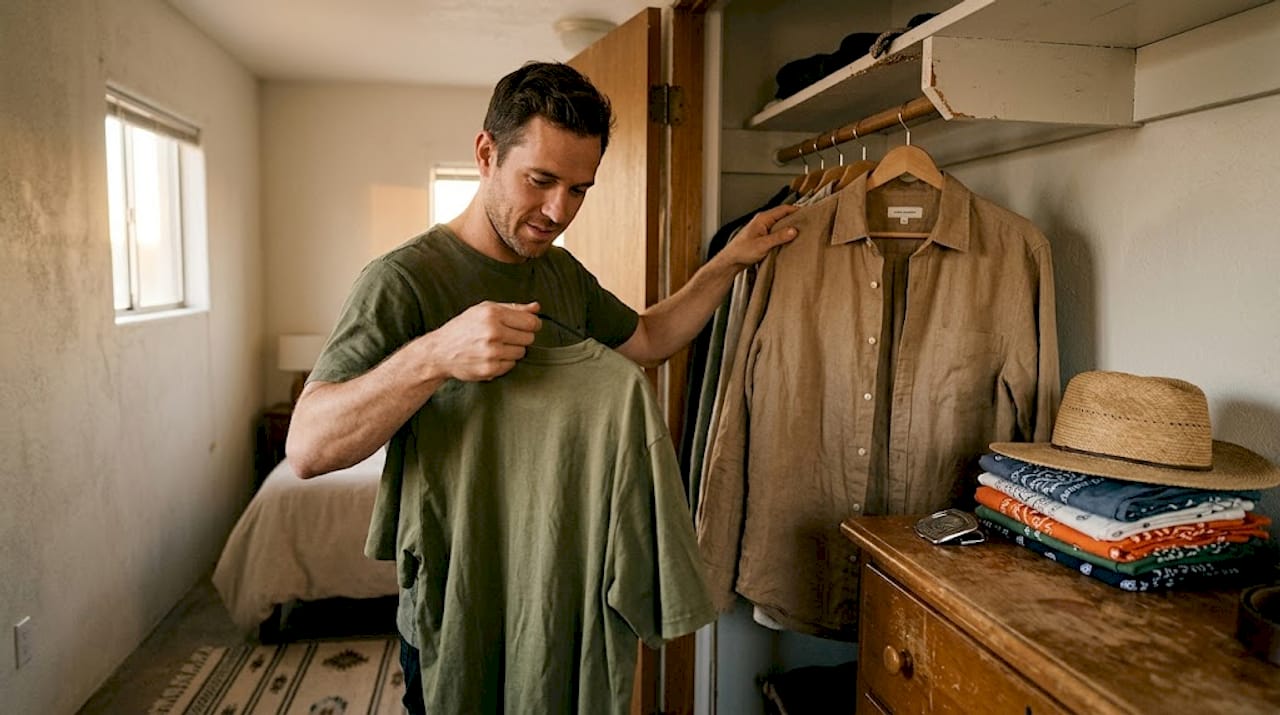
Arizona desertcore fuses boho, western, and cowboy elements for local pride. That fusion is what makes it so rich. You’re not locked into one narrow look. You can lean into fringe, turquoise, and wide-brim hats, or go cleaner with neutral tones, relaxed silhouettes, and subtle Southwestern prints.
Arizona temperatures can swing dramatically between day and evening. Summer nights in Phoenix can still drop 20°F or more after sunset, and higher elevations like Flagstaff see even sharper shifts. Planning for that range is essential. Here’s how to build a complete Arizona-inspired outfit:
- Start with a breathable base layer. Choose a loose cotton or linen top in a terracotta, sand, or sage green tone.
- Add structure with wide-leg or relaxed-fit pants. Avoid tight denim in summer heat. Opt for linen trousers or cotton-blend joggers.
- Layer a lightweight jacket or flannel. This handles the evening temperature drop without bulking up your look.
- Choose footwear that handles terrain. Leather sandals or boots work for most Arizona settings and align with the western element of the aesthetic.
- Accessorize with purpose. A wide-brim hat isn’t just stylish, it provides real UV protection. A bandana or scarf doubles as sun protection and an accessory.
- Finish with one statement piece. A turquoise ring, a bolo tie, or a hand-woven bag pulls the cultural identity of the look together.
Layering is one of the most underrated tools in the Arizona wardrobe. Understanding layering in desert climates helps you transition from daytime outdoor heat to cooler evenings without carrying a separate bag of clothes.
For a look at how unique Arizona streetwear ideas translate into real outfits, there are some genuinely creative combinations worth drawing from.
Desert fashion has also made a strong mark at large outdoor events. Coachella desert fashion shows how festival culture and desertcore are increasingly overlapping, though the Arizona version runs deeper than festival aesthetics.
Pro Tip: At outdoor festivals or all-day events, avoid the common mistake of prioritizing appearance over function. Sheer tops, bare midriffs, and light-colored synthetics look great in photos but leave you sunburned and overheated by noon. Go for coverage with breathable natural fabrics instead.
Sustainability and the future of desertcore fashion
After considering style and function, it’s worth asking: Is desert fashion merely a trend, or does it represent a growing movement for sustainability? The answer is clearly the latter. Desertcore’s emphasis on natural fibers, durable construction, and timeless aesthetics puts it in close alignment with slow fashion values.
Sustainable natural fibers align with the broader slow fashion shift, and desertcore happens to be built almost entirely around those fibers. Linen, cotton, and plant-based blends are biodegradable, renewable, and require significantly less processing than synthetics. Choosing them isn’t just a health and comfort decision. It’s an environmental one.
Social media has played a real role in spreading desertcore’s visibility, particularly on platforms where aesthetic communities thrive. But the most interesting development is how the sustainability conversation is deepening within those same communities. People aren’t just sharing the look. They’re talking about where their clothes come from, who made them, and how long they’ll last.
Here are some practical ways to shop more sustainably within the desert fashion space:
- Buy from local or regional brands that source responsibly and produce closer to home
- Choose natural fiber pieces with high percentages of linen, cotton, or plant-based blends
- Invest in fewer, better items rather than refreshing your wardrobe every season
- Look for hand-dyed or naturally dyed fabrics that skip synthetic chemical processes
- Shop second-hand or vintage for western and boho pieces with history and character
- Support small, family-owned makers who prioritize craft over volume
Arizona has genuine leadership potential in the slow fashion space. Local production, regionally inspired design, and a culture that values the land all point toward a natural home for sustainable desertcore. You can find great examples of local Arizona apparel that embody these values without sacrificing style.
The western and boho fusion that defines Arizona desertcore also keeps the aesthetic fresh without requiring trend cycles. When a style is rooted in place and culture rather than a runway season, it tends to age well. That durability is exactly what sustainable fashion advocates have been pushing for.
A new perspective: What most desert fashion guides miss
With the practical and cultural context set, it’s time to reconsider the wisdom behind true desert style. Most guides to desert fashion stop at the surface. They’ll tell you to wear earthy tones, choose linen, and throw on a wide-brim hat. That’s helpful, but it barely scratches the surface of what makes this aesthetic genuinely powerful.
The mistake is treating desertcore as an outfit formula rather than a mindset. Arizona’s real aesthetic isn’t just about looking good in photos at Horseshoe Bend. It’s about dressing with intelligence and pride. The people who actually live in the Sonoran Desert have been making smart fabric and layering choices for generations. That practical wisdom is baked into the aesthetic.
What gets lost in the Instagram version of desert fashion is the cultural respect it requires. Turquoise jewelry, Navajo-inspired prints, and southwestern motifs carry meaning. Wearing them without understanding their context reduces a rich cultural identity to decoration. That’s a real issue worth thinking about.
We also think that “timeless” desert style has less to do with how your outfit photographs and more to do with how it functions over years of wear. A quality linen piece you buy today should still serve you well a decade from now. That’s the durability standard that separates authentic desert fashion from trend chasing.
If you’re serious about building a genuine Arizona-inspired wardrobe, look at how local branding in Arizona fashion is redefining what regional pride looks like in wearable form. It’s more nuanced, more intentional, and far more interesting than any shortcut guide will tell you.
Shop desert-inspired Arizona apparel
If you’re inspired to infuse your wardrobe with true desertcore style, explore local options that embody Arizona’s vibe. At Arizona Swag, we design apparel that reflects real desert life: the colors, the textures, and the regional identity that makes this place unlike anywhere else.
Our cotton-blend Arizona hoodie offers the kind of comfortable, breathable layering that Arizona evenings call for, with bold desert-inspired artwork that speaks to local pride. For a softer, more premium feel, the ring-spun cotton hoodie delivers a smooth finish that holds up beautifully in the dry desert air. Every piece is designed with both style and function in mind, so you’re never choosing between looking good and feeling good. Head over to shop Arizona Swag and find the pieces that feel most like you.
Frequently asked questions
What colors are best for desert fashion?
Earthy tones like terracotta, sand, sage green, and sunset oranges not only mirror the desert landscape but also create a visually cohesive, naturally cool aesthetic. These shades work across seasons and layer beautifully together.
Is desert fashion practical for everyday wear?
Absolutely. Loose, flowing silhouettes paired with natural fabrics like linen and cotton adapt well to both the Arizona heat and the cooler indoor and evening temperatures you’ll encounter daily.
How does Arizona desertcore differ from other styles?
Arizona’s version uniquely fuses boho, western, and cowboy elements to create a look rooted in regional identity rather than generic festival or urban desert aesthetics. The result is more personal and more culturally grounded.
What fabric is most comfortable in the Arizona heat?
Linen is the top choice. It breathes exceptionally well and can absorb up to 20% moisture without feeling damp against your skin, which makes a real difference when temperatures push past 100°F.
Recommended
- How Arizona Weather Shapes Everyday Fashion: Fabrics, Layers, and Sun Protection - Arizona Swag
- Desert Inspired Clothing That Feels Arizona – Arizona Swag
- How Desert Living Influences Fashion: Practical Design, Fabrics, and Color Choices - Arizona Swag
- What to Wear in Arizona by Season - Arizona Swag


