

TL;DR:
- Authentic Arizona designs are handcrafted with unique materials and cultural symbols rooted in Native traditions.
- Spot genuine jewelry by examining craftsmanship details, silver stamps, natural turquoise variations, and provenance.
- Supporting Native artisans through reputable sources preserves cultural heritage and ensures ethical, authentic purchases.
Picture this: you’re browsing a market stall in Scottsdale or scrolling through an online shop, and you find a stunning piece of turquoise jewelry labeled “authentic Arizona design.” It looks beautiful, but something makes you pause. Is it truly handcrafted by a Native American artisan, or is it a mass-produced replica dressed up with a Southwest aesthetic? That question matters more than most people realize. Authentic Arizona designs carry real cultural weight, artisan skill, and natural materials that simply cannot be replicated by a factory. This guide walks you through exactly how to recognize the real thing, from core features and handcrafted details to tribal styles and smart buying practices, so you can shop with confidence and genuine appreciation.
Table of Contents
- Understand what makes an Arizona design authentic
- Prepare to spot handcrafted details and materials
- Recognize iconic Arizona tribal styles
- Verify authenticity and avoid common pitfalls
- The hidden challenges of spotting true Arizona authenticity
- Explore authentic Arizona-inspired apparel and accessories
- Frequently asked questions
Key Takeaways
| Point | Details |
|---|---|
| Authentic characteristics | Real Arizona designs feature sterling silver, natural turquoise, and visible handcrafted imperfections. |
| Tribal style differences | Navajo, Zuni, and Hopi jewelry each feature distinctive materials, techniques, and visual motifs. |
| Avoiding fakes | Always verify provenance, request certificates, and use basic physical tests to spot imitations. |
| Buying from the right sources | Established galleries, trading posts, and direct artist sales ensure authenticity and support ethical practices. |
Understand what makes an Arizona design authentic
Authenticity in Arizona design is not just a label. It reflects a living tradition rooted in the cultures of Native American tribes who have called this region home for centuries. When people talk about authentic Arizona designs, they are most often referring to jewelry and decorative items made by Navajo, Hopi, and Zuni artisans. These pieces are recognized by specific materials, construction methods, and cultural symbols that set them apart from anything you would find in a mass-production facility.
Authentic Arizona designs primarily feature sterling silver, natural turquoise sourced from Arizona mines, and handcrafted techniques passed down through generations. The turquoise itself often comes from well-known mines across the state, each with its own distinctive color profile.
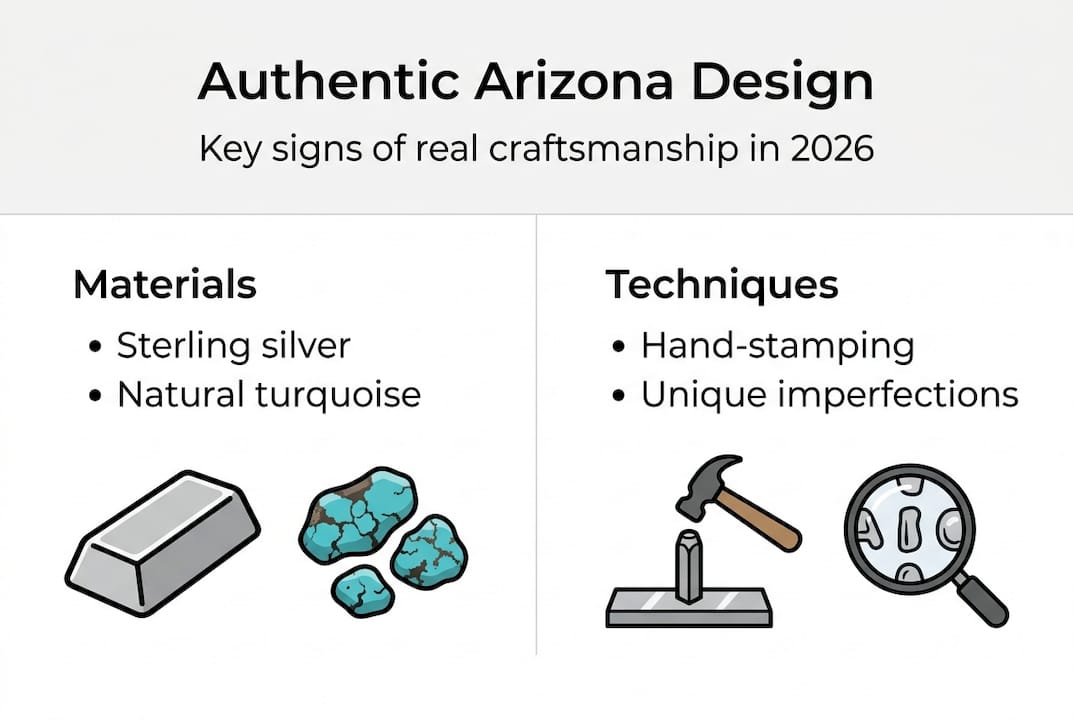
Here is a quick overview of Arizona’s most celebrated turquoise sources:
| Mine | Location | Color profile | Notable feature |
|---|---|---|---|
| Kingman | Mohave County | Sky blue, pyrite matrix | One of the oldest producing mines |
| Sleeping Beauty | Globe | Pure robin’s egg blue, low matrix | Highly prized for clean color |
| Bisbee | Cochise County | Deep blue, red or brown matrix | Considered among the rarest |
| Morenci | Greenlee County | Blue-green, heavy pyrite | Distinctive metallic shimmer |
Beyond the stone itself, the three primary tribal traditions each bring a unique visual language to their work:
- Navajo: Bold use of sterling silver, heavy stamp work, large turquoise cabochons, and the iconic squash blossom necklace
- Hopi: Overlay technique where one layer of silver is cut and fused over another, creating dimensional geometric patterns
- Zuni: Intricate inlay work, petite point settings, and carved stone fetishes representing animals and spirits
Handcrafted techniques are what truly separate authentic pieces from imitations. A Navajo silversmith shapes and stamps each piece by hand, meaning no two items are identical. Zuni inlay requires painstaking precision to fit tiny stone fragments into precise channels. These methods take years to master and cannot be replicated by machine at the same level of quality.
It is also worth knowing that the Indian Arts and Crafts Act of 1990 makes it illegal to misrepresent a product as Native American-made when it is not. This legal protection exists to support artisans and inform buyers. When you visit a local Arizona gift shop, look for sellers who clearly identify the tribal affiliation of the artist. That transparency is itself a sign of a trustworthy source.
For a broader foundation before you start shopping, reviewing Arizona apparel tips can help you understand what makes locally inspired items genuinely regional versus generically Southwest. Pair that with a solid Native American jewelry guide and you will be well prepared to make informed choices.
Prepare to spot handcrafted details and materials
Once you understand what authentic Arizona designs are, the next step is training your eye to spot the physical clues that confirm genuine craftsmanship. The good news is that many of these clues are visible and tactile, meaning you do not need a laboratory to identify them.
Authentic handcrafted pieces have a quality that machine-made items simply cannot replicate: beautiful imperfection. A stamped silver cuff made by a Navajo artisan will show subtle variations in the depth and spacing of the stamp work. The lines may not be perfectly uniform. That is not a flaw. It is evidence of a human hand at work.
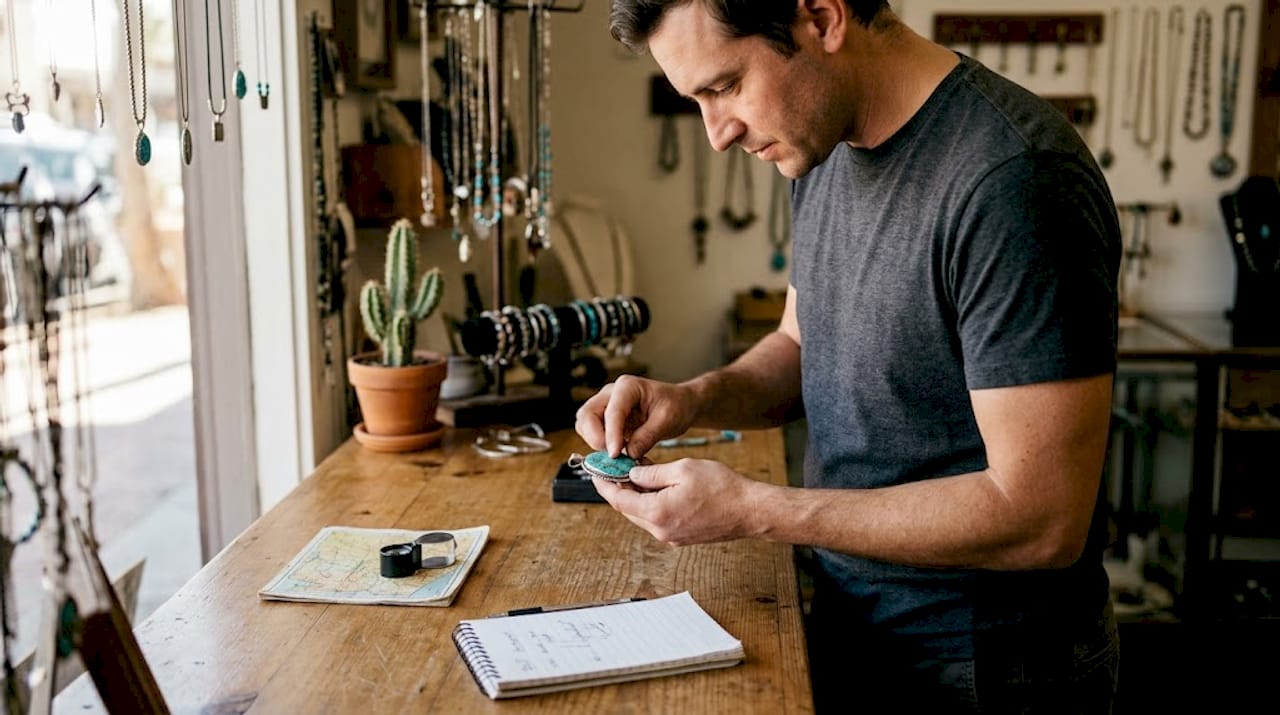
Here is how authentic and mass-produced pieces typically compare:
| Feature | Authentic handcrafted | Mass-produced imitation |
|---|---|---|
| Surface texture | Subtle variations, tool marks | Perfectly uniform, smooth |
| Stone settings | Slightly irregular bezels | Machine-perfect, identical |
| Weight | Substantial, solid feel | Lightweight, hollow |
| Silver stamps | 925 or Sterling present | Often absent or vague |
| Turquoise color | Natural variations, matrix | Uniform, overly bright |
To spot authentic jewelry, focus on these specific checkpoints:
- Check for silver stamps. Look on the back or inside of the piece for markings like “925,” “Sterling,” or the artist’s hallmark. These stamps confirm the silver content and the maker’s identity.
- Look for artist or tribal marks. Many artisans stamp their initials, a unique symbol, or their tribal affiliation onto their work. This is a strong indicator of authenticity.
- Examine the turquoise closely. Natural turquoise has color variations within the stone and an irregular matrix pattern, the web-like lines running through it. Perfectly uniform color is a red flag.
- Feel the weight. Genuine sterling silver and natural stone have real mass. If a piece feels surprisingly light, it may be silver-plated or contain synthetic materials.
- Inspect the setting. Handmade bezels (the metal frames holding stones) are shaped individually and may show minor irregularities. Machine-made settings are flawlessly consistent.
When evaluating turquoise specifically, a fair valuation guide recommends considering the stone’s origin, treatment status, and color saturation together rather than relying on any single factor.
Pro Tip: Run a fingernail lightly along the back of a silver piece. Authentic sterling feels smooth but slightly cool and dense. Plated metals often feel thinner and may show slight peeling at edges over time.
For more practical advice on finding quality pieces that reflect real Arizona culture, the local shopping tips at Arizona Swag offer useful guidance. You can also find inspiration for how authentic design translates into wearable art by browsing Arizona themed shirts that draw on the same visual traditions.
Recognize iconic Arizona tribal styles
Knowing the broad strokes of tribal design traditions helps you identify not just whether a piece is authentic, but which cultural tradition it comes from. Each of Arizona’s three major jewelry-making tribes has a visual signature that experienced buyers learn to recognize almost immediately.
Tribal style distinctions are clear once you know what to look for. Navajo work is characterized by heavy silver and large stones. Zuni work is intricate and stone-focused. Hopi work is all about the interplay of light and shadow in silver.
Navajo style:
- Heavy gauge sterling silver with bold stamp work patterns
- Large, domed turquoise cabochons set in wide bezels
- Squash blossom necklaces with a central naja (crescent pendant)
- Concho belts with stamped oval or round silver discs
- Earthy, powerful aesthetic that commands attention
Zuni style:
- Channel inlay using turquoise, coral, jet, and shell cut into geometric shapes
- Petite point settings where tiny oval or teardrop stones are arranged in tight clusters
- Carved stone fetishes representing animals like bears, eagles, and wolves
- Delicate, detailed work that rewards close inspection
Hopi style:
- Overlay technique: a top layer of silver with cutout designs is soldered onto a base layer
- The recessed areas are oxidized to create contrast, making the patterns stand out
- Designs draw heavily from Hopi ceremonial imagery, kachina figures, and nature symbols
- Clean, graphic quality that feels both ancient and modern
Pro Tip: If you are at a market or gallery, ask the seller which tribe the artist belongs to and where they are from. A knowledgeable, honest seller will answer without hesitation. Vague answers like “Southwest style” or “inspired by Native art” are worth noting carefully.
Understanding tribal provenance matters for more than just aesthetics. It connects the piece to a specific community, a specific set of techniques, and a living cultural tradition. When you choose a Zuni inlay bracelet over a generic turquoise piece, you are honoring a craft that has been refined over generations. That choice also supports the artisan’s livelihood directly.
For ideas on how to incorporate these design traditions into your everyday look, explore showing Arizona pride through apparel and accessories. You can also learn more about the value of buying from family-owned Arizona shops that maintain close relationships with local artists and makers. For additional guidance on reading tribal design cues, the tribal jewelry tips resource is a helpful reference.
Verify authenticity and avoid common pitfalls
Even with a trained eye, buying authentic Arizona designs requires one more layer of diligence: verification. This is where documentation, simple tests, and smart sourcing come together to protect your purchase.
Start by asking for provenance. Provenance means the documented history of where a piece came from, who made it, and what materials were used. Not every piece will have a full paper trail, and that is a known challenge in this market. Provenance is often lost over time, and mines can produce stones with similar appearances, making origin difficult to confirm without lab testing. However, reputable sellers will at minimum provide a certificate of authenticity or a written statement identifying the artist and tribe.
Here is a step-by-step approach to verifying what you are buying:
- Request documentation. Ask for a certificate of authenticity, artist bio, or tribal affiliation statement. Reputable galleries and trading posts provide these routinely.
- Understand turquoise treatments. Natural turquoise is untreated. Stabilized turquoise has been hardened with resin, which is acceptable but must be disclosed. Synthetic or imitation turquoise (dyed howlite, plastic, reconstituted material) is not acceptable in authentic pieces.
- Use simple field tests. The acetone test involves applying a small amount of nail polish remover to a hidden area. Dyed stones may show color transfer. A scratch test on an inconspicuous spot can reveal if a stone is soft (howlite) versus genuine turquoise.
- Check the heat response. Plastic imitations may show slight melting or a chemical smell when a hot needle is briefly applied to a hidden edge. Genuine stone will not react this way.
- Buy from established venues. Established trading posts and galleries like Palms Trading or Tucson Indian Jewelry maintain standards that protect buyers and support artisans. Buying directly from artists at juried shows is another excellent option.
The Indian Arts and Crafts Act makes it a federal offense to sell misrepresented Native American art. When you buy from a compliant source, you are not just protecting your investment. You are supporting a legal and ethical framework that protects Native artisans.
For Kingman turquoise specifically, sky-blue color with a distinctive pyrite matrix is the hallmark, but visual identification alone is not conclusive without provenance. Keep that in mind when a seller makes very specific mine claims without documentation.
When you want Arizona designs that carry genuine regional identity without the complexity of jewelry authentication, consider real Arizona souvenirs or Arizona streetwear looks that draw on the same desert-inspired visual language in an accessible, wearable format.
The hidden challenges of spotting true Arizona authenticity
Here is something most guides will not tell you: absolute certainty about mine origin or full provenance is rarely achievable for the average buyer, and chasing that certainty can actually get in the way of appreciating genuinely excellent work.
No single test confirms mine origin without lab analysis or documented provenance. Visual identification is inherently subjective, and even experienced collectors sometimes disagree. For most buyers, focusing on overall craftsmanship is a more reliable and rewarding approach than trying to pin down the exact mine.
We believe the real question is not “Can I prove this came from Bisbee?” but rather “Does this piece show the skill, care, and cultural knowledge of a genuine artisan?” A beautifully executed Navajo stamp work cuff with a clear artist hallmark and sterling stamp tells you far more about its authenticity than a vague mine claim with no documentation.
Trust your instincts about craftsmanship. Look for the signs of a human hand. Ask questions and pay attention to how sellers respond. Genuine dealers welcome scrutiny. That combination of observation, inquiry, and comfort with some uncertainty is what separates informed buyers from frustrated ones.
For those who love the Arizona aesthetic in wearable form, Arizona streetwear branding offers a fascinating look at how desert-inspired design translates into everyday fashion with real regional identity.
Explore authentic Arizona-inspired apparel and accessories
If this guide has sparked your appreciation for genuine Arizona design, there are great ways to wear that pride every day. At Arizona Swag, we bring the bold colors, desert textures, and regional spirit of Arizona into apparel and accessories that feel as authentic as the landscape that inspired them.

Our Arizona Swag shop features pieces designed to reflect real Arizona culture, from the warm terracotta tones of the Sonoran Desert to the deep blue of a clear Phoenix sky. If you are looking for something cozy and bold, the Arizona hoodie design brings desert-inspired artwork to premium fleece. For a softer feel with the same regional character, the ring-spun cotton hoodie is a favorite. Every piece is crafted to let you carry a piece of Arizona with you wherever you go.
Frequently asked questions
How can I tell if an Arizona design is truly handcrafted?
Look for unique imperfections, substantial weight, artisan hallmarks, and official stamps like “Sterling” or “925.” These physical clues, along with handcrafted imperfections and natural turquoise with color variations, are reliable indicators of genuine handcrafting.
What’s the best way to avoid buying fake turquoise from Arizona?
Always ask for certificates and provenance documentation, and use simple field tests like the scratch or acetone method. Buying from reputable sources such as established trading posts or galleries is your strongest protection against fakes like dyed howlite or reconstituted material.
Do Arizona mines have distinguishing turquoise colors?
Yes, each mine has a recognizable color profile. Kingman turquoise value is tied to its sky-blue tone and pyrite matrix, while Sleeping Beauty is prized for pure robin’s egg blue and Bisbee for deep blue with red matrix. Visual identification alone, however, can be subjective.
How important is supporting Native American artisans when shopping for Arizona designs?
It is very important, both ethically and legally. Buying from established galleries or directly from artists supports artisan livelihoods and ensures compliance with the Indian Arts and Crafts Act, which protects both buyers and makers.


