

TL;DR:
- True premium apparel is defined by fabric quality, construction, durability, and ethical standards.
- High GSM, double-stitched seams, and certifications like GOTS or Fair Trade signify genuine quality.
- Investing in premium clothing offers long-term value through durability, better fit, and ethical production.
Premium apparel gets misunderstood all the time. Most people assume a higher price tag automatically means better quality, but that logic falls apart the moment a $90 fast-fashion hoodie fades after three washes. True premium clothing is built on specific, measurable factors: the fibers woven into the fabric, the hands that stitch every seam, the certifications earned through ethical practice, and the long-term value you get per wear. Whether you’re repping Arizona pride or just building a wardrobe that lasts, understanding what actually makes apparel premium changes how you shop forever.
Table of Contents
- Fabrics and materials: The foundation of premium apparel
- Construction and craftsmanship: How premium apparel is made
- Durability and lasting value: Why premium means long-term savings
- Ethical production and certification: The hidden premium value
- Why most people get ‘premium apparel’ wrong: Our Arizona perspective
- Experience true premium: Shop Arizona-inspired quality
- Frequently asked questions
Key Takeaways
| Point | Details |
|---|---|
| Top-tier materials | Premium apparel is made with quality fibers and higher GSM for durability and comfort. |
| Expert craftsmanship | Dense stitching, reinforced seams, and quality hardware make premium garments long-lasting. |
| Long-term value | Well-made pieces age beautifully, saving money over frequent replacements. |
| Ethical standards | Look for certified ethical production to ensure your clothing supports fair practices. |
Fabrics and materials: The foundation of premium apparel
Every great garment starts with the right raw material. The fiber content of a piece of clothing determines how it feels against your skin, how it holds up in the heat, and whether it looks sharp after 50 washes or falls apart after five. When you’re living and dressing in Arizona’s desert climate, fabric choice matters even more.
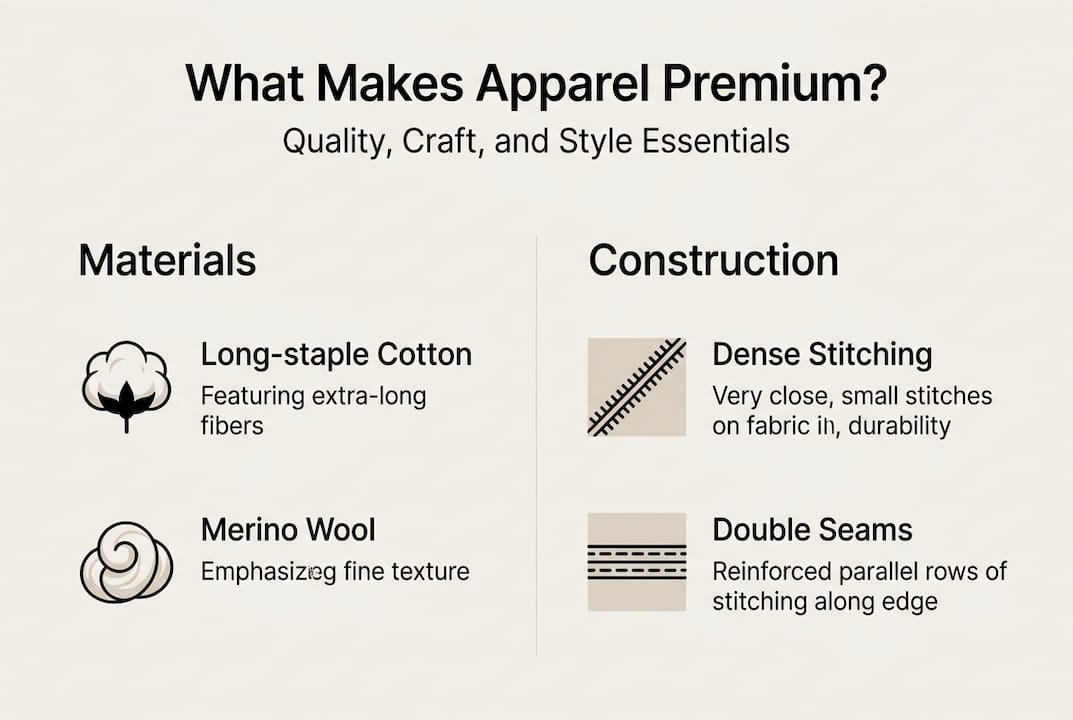
Superior fabric quality, including long-staple cotton, merino wool, and high GSM weights, is what separates premium apparel from the rest. Long-staple cotton, like Pima or Egyptian cotton, has longer individual fibers that create a smoother, stronger, and softer fabric. Shorter fibers pill faster and feel rougher over time. Merino wool, while less common in streetwear, offers natural temperature regulation and moisture-wicking properties that make it surprisingly practical for warm climates.
GSM stands for grams per square meter, and it measures fabric density and weight. Here’s a simple breakdown:
| Garment type | Basic GSM | Premium GSM |
|---|---|---|
| T-shirt | Under 140 | 180 GSM and above |
| Hoodie | Under 280 | 350 GSM and above |
| Sweatshirt | Under 260 | 320 GSM and above |
Higher GSM means a denser, more durable fabric that holds its shape, resists pilling, and feels substantial in your hands. A thin, flimsy tee might feel light, but it won’t survive a desert summer’s worth of wear and washing.
When it comes to fiber blends, here’s how common options compare:
- 100% long-staple cotton: Breathable, soft, and ideal for warm climates. Best for everyday wear in Arizona heat.
- Cotton-polyester blend (50/50): More wrinkle-resistant but less breathable. Often used in budget-friendly options.
- Ringspun cotton: Softer and stronger than standard cotton due to the spinning process. A step up without a huge price jump.
- Tri-blends (cotton, polyester, rayon): Lightweight and drapey, but less durable over time.
For desert-inspired fabric choices, breathability and durability are non-negotiable. You want a tee that keeps you cool during a Phoenix afternoon and still looks great when you’re out at night. Explore Arizona graphic tee styles that pair bold regional designs with fabrics built to perform.
Pro Tip: Flip your garment inside out and check the tag for fiber content and GSM. If the tag doesn’t list GSM, feel the weight in your hands. A quality tee should feel dense and smooth, not thin and papery.
Construction and craftsmanship: How premium apparel is made
Even the finest fabric can be ruined by poor construction. How a garment is cut, stitched, and finished determines whether it holds together for years or unravels at the seams after a few wears. This is where premium apparel truly separates itself from the crowd.
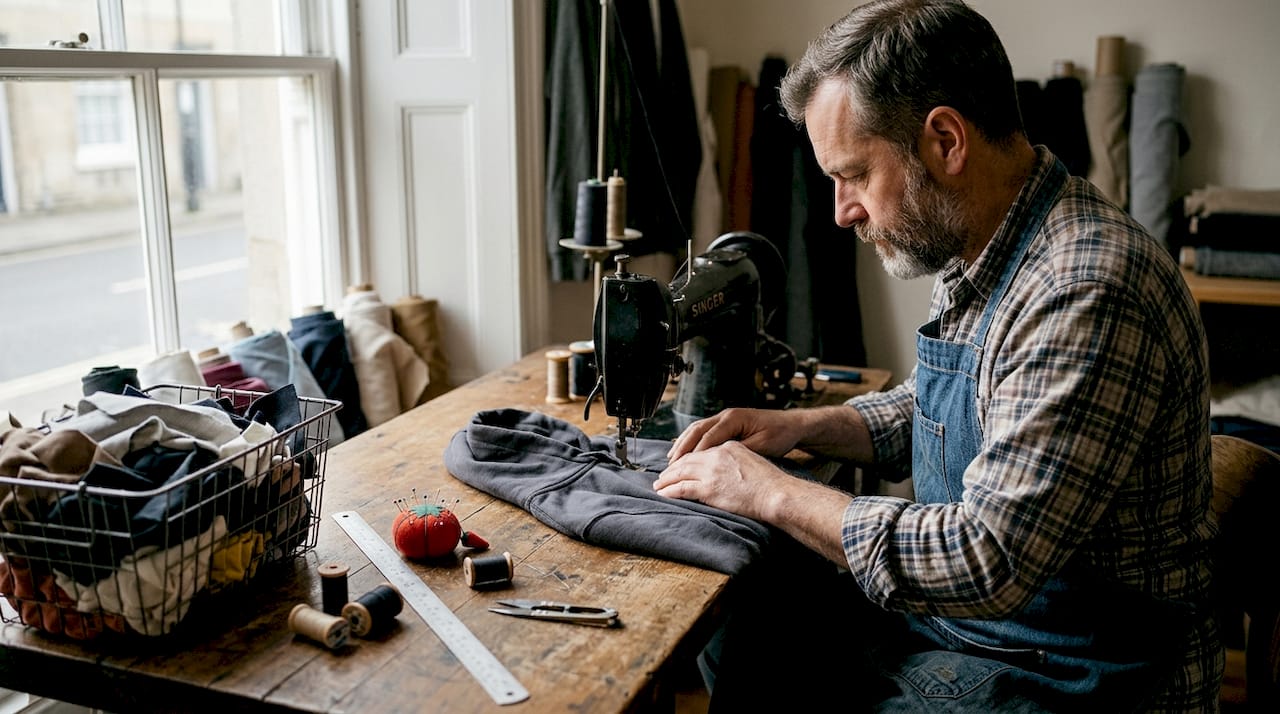
Construction techniques like 8 to 12 stitches per inch, double-stitched seams, and quality hardware ensure durability that budget garments simply can’t match. Stitch count matters because more stitches per inch means a tighter, stronger seam that resists stress and wear. Budget clothing often uses 5 to 7 stitches per inch, which looks fine at first but breaks down quickly.
Here’s a side-by-side comparison of basic versus premium construction:
| Feature | Basic garment | Premium garment |
|---|---|---|
| Stitches per inch | 5 to 7 | 8 to 12 |
| Seam type | Single-stitched | Double or flat-felled |
| Zipper hardware | Generic plastic | YKK or equivalent |
| Hem finish | Rolled hem | Reinforced hem |
| Label attachment | Printed or loose | Sewn flat and secure |
Flat-felled seams, the kind you see on the inside of quality denim, fold the raw fabric edge under and stitch it down twice. This eliminates fraying and adds structural strength. Double-stitched seams serve a similar purpose, reinforcing stress points like armholes and collar edges.
Hardware is another overlooked detail. YKK zippers, made by a Japanese manufacturer, are the gold standard in the apparel industry. They glide smoothly, resist corrosion, and rarely fail. Cheap zippers snag, break, and corrode, turning a good-looking hoodie into a frustrating piece of clothing.
Key construction features to look for:
- Double-stitched side seams for strength and longevity
- Reinforced stress points at pockets, cuffs, and collar
- Flat-felled or bound seams on the inside of the garment
- Quality zipper hardware that moves smoothly without snagging
- Even, consistent stitching with no loose threads or skipped stitches
Check out the double-stitched hoodie example or the premium tee details to see how quality construction looks in practice.
Pro Tip: Turn your shirt inside out before buying. Run your finger along the seams. Uniform, dense stitching with no loose threads is a reliable sign of quality construction.
Durability and lasting value: Why premium means long-term savings
Here’s a perspective shift worth holding onto: premium apparel is not an expense. It’s an investment. The math works out clearly when you calculate cost-per-wear, which is simply the price of a garment divided by the number of times you wear it.
Durability is determined by shape retention, color fastness, and how well garments age through repeated washing and wearing. A $15 fast-fashion tee might seem like a deal, but if it fades, shrinks, and loses its shape after 10 washes, you’ve already spent more per wear than a $45 premium tee that lasts three years.
“The true cost of clothing isn’t what you pay at checkout. It’s what you pay every single time you have to replace it.”
Quality hoodies built from 350+ GSM fleece with reinforced seams can realistically last 5 to 10 years with proper care. That’s not an exaggeration. Well-made garments actually get softer and more comfortable over time as the fibers settle and break in. Budget pieces do the opposite: they stiffen, pill, and fade.
Here are three simple checks to run after multiple washes:
- Fit check: Does the garment still hold its original shape, or has it stretched, shrunk, or warped at the collar and cuffs?
- Color check: Is the color still rich and true, or has it faded, washed out, or developed uneven patches?
- Softness check: Does the fabric feel as good or better than it did new, or has it become rough, stiff, or pilly?
If a garment passes all three after 20 or more washes, you’re holding something genuinely premium. For how durability matters in Arizona fashion, the desert climate adds another layer. Sun exposure, heat, and dry air are tough on low-quality fabrics. Premium construction and materials hold up where cheaper options fall apart fast.
Ethical production and certification: The hidden premium value
Beyond fabrics and construction, conscious shoppers expect their apparel to reflect ethical values and skilled workmanship. This is one of the most overlooked dimensions of what makes clothing truly premium, and it’s becoming more important every year.
Ethical manufacturing, certifications like GOTS, Fair Trade, and B Corp, along with skilled labor from respected production regions, support consistent premium quality. These certifications are not just marketing labels. They represent verified standards for how workers are treated, how materials are sourced, and how production facilities operate.
Here’s what each major certification means:
- GOTS (Global Organic Textile Standard): Covers the entire supply chain for organic fibers, from farming to finished product. Ensures no harmful chemicals and fair labor practices.
- Fair Trade Certified: Guarantees workers receive fair wages and safe working conditions. Premiums paid go directly back to workers and communities.
- B Corp Certification: Awarded to companies that meet high standards of social and environmental performance, accountability, and transparency.
- OEKO-TEX Standard 100: Tests for harmful substances in textiles, ensuring the finished product is safe for skin contact.
Skilled labor matters for quality too. Experienced garment workers produce more consistent sizing, cleaner stitching, and fewer defects. Regions known for high-quality production, like parts of Japan and Italy, have long traditions of textile craftsmanship that show up directly in the finished garment.
“When workers are paid fairly and given proper conditions, they take pride in their craft. That pride shows up in every stitch.”
For Arizona streetwear, demanding ethical production raises the entire standard of what local and regional brands put out. When you choose certified, ethically made apparel, you’re not just buying a hoodie. You’re supporting a system that values quality at every level.
Why most people get ‘premium apparel’ wrong: Our Arizona perspective
Here’s the honest truth: most shoppers chase hype. They see a recognizable logo or a high price point and assume that equals quality. But we’ve seen firsthand that the most meaningful premium pieces aren’t always the loudest ones in the room.
Arizona streetwear, done right, blends functional fabrics built for desert life, ethical craftsmanship, and genuine regional identity. That’s a different kind of premium. It’s not about flexing a brand name. It’s about wearing something that connects you to this landscape, this culture, and this community.
The real markers of premium apparel are the ones we’ve covered: GSM, stitch count, fiber content, certifications, and durability over time. When you know what to look for, the buzzwords fade away and the actual quality becomes obvious. Explore local tee styles that last and you’ll see the difference between apparel made to sell fast and apparel made to wear for years. Invest in pieces with a story, a standard, and a connection to where you live.
Experience true premium: Shop Arizona-inspired quality
If you’ve made it this far, you now know exactly what to look for in premium apparel. You know the GSM numbers, the stitch counts, the certifications, and the durability tests that separate quality from hype. Now it’s time to feel that difference for yourself.
At Arizona Swag, every piece is designed with desert life in mind. From the premium Gildan hoodie built with heavyweight fleece and reinforced seams, to the USA cotton tee crafted from soft, breathable ringspun cotton, the quality is built in, not just marketed. These are pieces that carry Arizona’s bold, sun-soaked identity and hold up wash after wash. Browse the full collection and wear your regional pride the right way.
Frequently asked questions
What fabrics are considered premium for streetwear?
Premium streetwear uses long-staple cotton, merino wool, and dense blends over 180 GSM for durability and comfort. These fibers create softer, stronger garments that hold up through repeated wear and washing.
How can you tell if clothing is made with quality construction?
Look for 8 to 12 stitches per inch, double-stitched seams, and quality hardware like YKK zippers. Turning the garment inside out gives you a clear view of seam quality and stitch consistency.
Is premium apparel worth the extra cost?
Yes. Premium pieces last longer and offer better fit, comfort, and lower cost per wear over time. The upfront investment pays off when you stop replacing the same garment every season.
What ethical certifications should I look for in premium apparel?
Seek out GOTS, Fair Trade, and B Corp certifications for assurance of ethical and sustainable production. These labels verify that workers, materials, and manufacturing processes all meet verified quality and fairness standards.


