

TL;DR:
- Arizona fashion is deeply rooted in and inspired by the state’s landscape and cultural heritage.
- Authentic apparel features regional motifs, climate-appropriate fabrics, and supports local artisans.
- Wearing landscape-driven clothing preserves regional identity and offers a sustainable, expressive choice.
Most people assume regional apparel is just a matter of slapping a state name or a cactus print on a generic t-shirt. Arizona tells a completely different story. Here, the desert landscape does not just inspire the imagery on your clothing. It dictates the fabrics, the color palette, the silhouettes, and the cultural weight behind every design. The Sonoran Desert, the red rock formations of Sedona, the saguaro-dotted skylines at dusk: these are not decorations. They are the foundation of a genuine fashion identity that locals feel in their bones. This guide breaks down how Arizona’s landscape shapes every dimension of regional apparel, from practical material choices to the deeper storytelling behind every bold desert-inspired design.
Table of Contents
- Why landscape matters in Arizona fashion
- How the desert drives practical design and material choices
- Landscape motifs and regional storytelling in apparel
- How to find and choose authentic Arizona landscape apparel
- The real impact: What most people miss about Arizona landscape fashion
- Find your Arizona-inspired look today
- Frequently asked questions
Key Takeaways
| Point | Details |
|---|---|
| Landscape shapes style | Arizona’s desert and climate are central to creating authentic, practical, and expressive fashion. |
| Authenticity matters | Real local brands use regional stories and sustainable practices instead of mass-produced clichés. |
| Smart choices | Prioritizing landscape-inspired, climate-adapted apparel supports both style and state pride. |
| Respect local culture | Choosing apparel from regional artisans helps avoid cultural appropriation and supports Arizona communities. |
Why landscape matters in Arizona fashion
Arizona is not a monolith. The state spans desert basins, high-elevation pine forests, volcanic rock fields, and canyon country. The Sonoran Desert alone covers roughly 100,000 square miles and stretches into Mexico and California. That kind of dramatic, varied environment creates a visual and cultural richness that makes Arizona’s regional fashion genuinely distinct from anything you would find coming off a generic supply chain.
When you wear something that reflects this landscape, you are not just making a style choice. You are communicating something real about where you live, what you value, and how that place has shaped you. The colors of Arizona’s landscape, think burnt sienna, dusty sage, warm sandstone, deep turquoise, and terracotta, are not just trendy earth tones. They are pulled directly from the rock, the sky, and the soil of a place that has its own ancient identity. Following Arizona style trends means staying connected to that living color story, not chasing whatever shades happen to appear on runways in New York or Paris.
Here is the challenge: most of what passes as “Arizona fashion” in tourist shops and mass retail is not landscape-driven at all. It is stereotype-driven. A neon cactus on a fast-fashion tee produced overseas has no connection to the actual environment or communities of Arizona. As mass-produced imports dominate 80% of the Southwest clothing market, the risk of erasing authentic regional identity grows every season. Regional artisans and locally-owned brands are the ones keeping real landscape-driven fashion alive.
“The desert is not a backdrop. It is the story. When apparel reflects that honestly, it becomes something more than clothing. It becomes a declaration of belonging.”
There is also an important cultural dimension to consider. Arizona’s landscape has been home to Indigenous peoples for thousands of years, including the Navajo Nation, the Hopi, the Tohono O’odham, and many others. Their traditional designs, woven into textiles and pottery for generations, are deeply tied to the landscape and carry spiritual and cultural meaning. Sourcing authentic pieces from regional artisans and supporting state pride apparel that respects this heritage is not just a purchasing preference. It is a form of cultural respect.
Here is a quick comparison to show the difference between authentic landscape-driven fashion and generic regional merchandise:
| Feature | Authentic AZ landscape apparel | Generic regional merchandise |
|---|---|---|
| Color palette | Earth tones pulled from local geology | Bright or neon colors with no regional basis |
| Materials | Climate-adapted: breathable cotton, moisture-wicking blends | Standard mass-market fabrics |
| Design origin | Local artists, regional artisans, or Indigenous makers | Overseas factories, generic templates |
| Cultural connection | Rooted in place, people, and history | Surface-level imagery |
| Sustainability | Often prioritizes small-batch, lower environmental impact | High volume, fast fashion model |
What makes authentic landscape apparel stand out:
- Colors rooted in actual Arizona geology: rust, sage, sandstone, midnight blue
- Motifs drawn from the environment rather than copied from a tourist catalog
- Made or designed by people who actually live in and know the desert
- Intentional collaboration with or respect for Indigenous and Southwestern traditions
Now that you know why landscape is at the heart of Arizona’s apparel, let’s look at how it directly impacts what you wear, day to day.
How the desert drives practical design and material choices
Living in Arizona is not like living anywhere else in the country. Phoenix regularly hits 115 degrees Fahrenheit in summer. UV index readings in the state are frequently at “extreme” levels for months at a time. That is not just a weather footnote. It fundamentally changes what clothing needs to do to function well. Authentic desert fashion is not just beautiful. It is engineered for the environment.
Fabric choice is the first design decision that the landscape drives. Lightweight cotton and cotton-poly blends dominate for a reason. Cotton breathes. It wicks moisture away from the skin, which matters enormously when you are spending time outdoors in dry desert heat. Linen is another material gaining popularity for exactly the same reason. Its loose weave allows air circulation, making it both comfortable and practical in high temperatures. You can learn more about how these considerations play out in the world of desert living fashion, where design decisions are always shaped by the environment first.
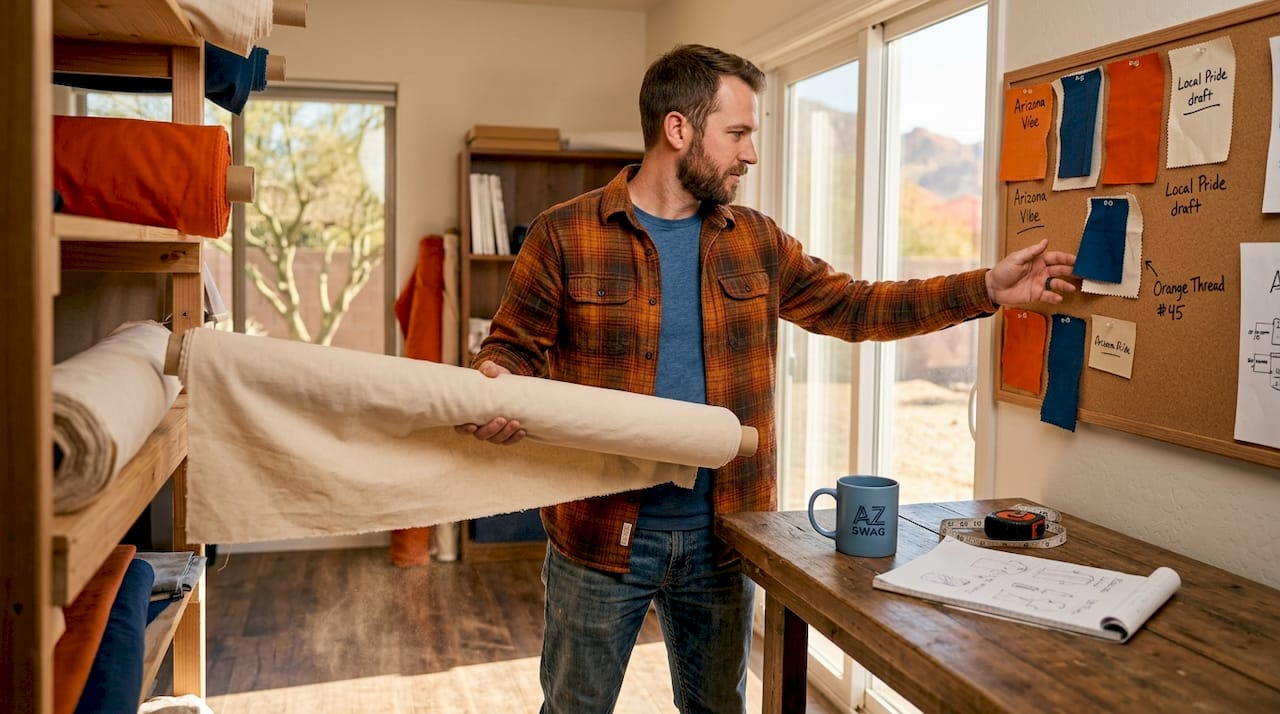
Color is the second major design factor. Darker colors absorb more sunlight and heat, so authentic desert-adapted fashion tends to favor lighter, reflective tones for daywear: sand, cream, pale terracotta, dusty rose, and sage green. At the same time, bold earth tones like deep rust, burnt orange, and rich turquoise appear in statement pieces designed for the cooler evening hours or layered looks in Arizona’s surprisingly cold winter months, especially at higher elevations. Choosing weather-appropriate apparel means understanding this balance between protection and expression.
Local brands prioritizing authenticity like State Forty Eight have built their entire identity around functional desert-adapted design, proving that climate-conscious fashion and genuine regional pride are not separate goals. They are the same goal.
Here is a practical breakdown of the top design features to look for in authentic Arizona climate-adapted apparel:
- Breathable fabric construction: Look for open-weave cotton, linen, or moisture-wicking blends. Avoid heavy synthetic fabrics that trap heat.
- UPF-rated options when needed: Some local brands incorporate UPF (ultraviolet protection factor) ratings into their fabric choices for outdoor use, particularly in hats and long-sleeve tees.
- Loose or relaxed silhouettes: Tight-fitting garments trap heat against the skin. Desert-adapted fashion often features relaxed cuts that allow air to move freely.
- Layering-friendly designs: Arizona mornings can be 40 degrees and afternoons can be 90 degrees, especially in spring and fall. Hoodies, light jackets, and layerable tees are wardrobe staples here for exactly this reason.
- Sustainable production methods: Many local brands are moving toward small-batch production and lower-impact manufacturing. This reflects an environmental ethic that mirrors the landscape itself.
| Fabric type | Best use in Arizona climate | Common local application |
|---|---|---|
| Lightweight cotton | Everyday warm-weather wear | T-shirts, totes, baseball caps |
| Cotton-poly blend | Durability with breathability | Hoodies, performance tees |
| Linen | Extreme heat days | Button-downs, casual shirts |
| Moisture-wicking synthetic | Active outdoor use | Athletic tees, outdoor gear |
Pro Tip: When shopping for Arizona-made apparel, check the product description for any mention of fabric weight (measured in gsm, or grams per square meter). A lighter gsm, around 140 to 160, signals a more breathable shirt suited for desert heat.
Understanding material and design choices can help you spot truly local, landscape-inspired apparel. But what should you look for in the motifs and messages on Arizona clothing?
Landscape motifs and regional storytelling in apparel
A saguaro cactus on a t-shirt can mean two very different things. On a mass-produced tourist tee sold at a convenience store off the interstate, it is a visual shortcut, a placeholder for “I visited Arizona.” On a carefully designed piece from a local brand, that same cactus can represent the specific beauty of the Sonoran Desert at sunset, the scale of something that takes 75 years to grow its first arm, the symbol of resilience in an unforgiving environment. The difference is intention. And intention is something you can learn to read.
Authentic Arizona landscape apparel uses motifs that carry genuine visual and cultural meaning. These are some of the most recognized and respected symbols in local fashion:
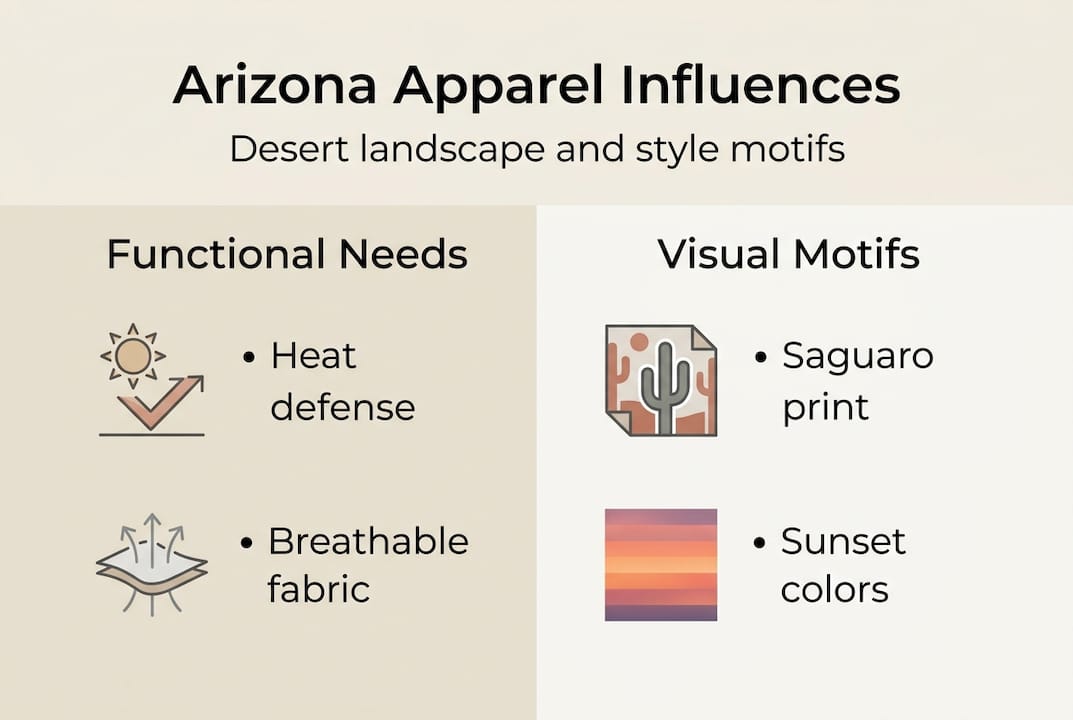
- Saguaro silhouettes: The towering saguaro is an unofficial symbol of Arizona and appears in thousands of local designs. The best versions capture the cactus at golden hour, in winter snow, or framed against a starry sky, giving it emotional and environmental context.
- Mountain ranges: The Superstition Mountains, the McDowell Sonoran Preserve, the Santa Catalinas near Tucson: Arizona’s mountain skylines translate beautifully into graphic design and carry a strong sense of place for anyone who has hiked them.
- Desert color gradients: Sunrise and sunset palettes in Arizona are spectacular. Coral bleeding into lavender, gold into deep rust: local designers use these natural color transitions as a primary visual language.
- Native geometric patterns: Borrowed respectfully from Southwestern Indigenous textile traditions, geometric patterns in terracotta, black, and white appear in many authentic pieces. The key word is “borrowed respectfully,” meaning they come from direct collaboration with or proper attribution to Indigenous artists.
- Road and landscape compositions: Arizona’s open roads, visible for miles across the desert floor, are another powerful motif. They evoke freedom, space, and the particular feeling of driving through Monument Valley at dawn.
The brands that get this right are the ones building real storytelling into their design process. Local brands like State Forty Eight approach each design as a piece of regional narrative, not just a product. That is what separates a wearable piece of art from a forgettable graphic tee.
You can explore what this looks like in practice by looking at desert-inspired clothing that actually captures the spirit of the place. You will notice immediately that the best pieces feel personal, like something you would wear because it says something true about you, not just something vague about a state you visited.
Arizona streetwear branding has grown significantly in recent years because young Arizonans are increasingly aware of and proud of their regional identity. They want apparel that reflects the actual texture of their lives here, not a sanitized, commercialized version of it. Creating unique Arizona streetwear looks starts with choosing pieces that draw from the real landscape, not the postcard version of it.
Pro Tip: Before buying a piece with Southwestern or Indigenous-inspired patterns, check the brand’s website for any mention of artist collaboration, cultural attribution, or Indigenous-owned production. This small step makes a significant difference in supporting ethical fashion.
Once you can decode landscape symbolism, it is easier to find apparel that feels both authentic and personal. Next, let’s see how you can incorporate this into your own look and make smart buying decisions.
How to find and choose authentic Arizona landscape apparel
Knowing what authentic landscape-inspired apparel looks like is only half the process. The other half is knowing where to find it and how to evaluate what you are looking at before you buy. This is where thoughtful purchasing can make a real difference, both for your wardrobe and for the local creative economy.
Follow these steps when shopping for authentic Arizona landscape apparel:
- Start with locally-owned brands: Search for brands that are based in Arizona, not just inspired by it. A company headquartered in Phoenix or Tucson is far more likely to produce apparel with genuine landscape connection than a national brand that adds an Arizona tee to its lineup seasonally.
- Check the design origin story: Authentic brands typically share the story behind their designs. Look for information about who designed the piece, what landscape or cultural reference it draws from, and whether it was produced locally or in collaboration with regional artists.
- Look for fabric transparency: Brands that care about desert-adapted design will usually tell you exactly what their garments are made from and why. This level of transparency is a strong signal of authenticity.
- Evaluate the motifs critically: Ask yourself whether the imagery on a garment is generic or specific. A generic desert scene could come from anywhere. A design that references a specific mountain range, geological feature, or regionally significant color palette tells you the designer actually knows and cares about Arizona.
- Support Indigenous and Southwestern artisans directly: For pieces that incorporate traditional patterns or symbols, buying directly from Indigenous artists or from brands that collaborate officially with them is the most culturally respectful and economically supportive choice you can make.
Watch for these red flags when evaluating any Arizona-themed apparel:
- Prices that seem impossibly low for a locally-made item
- No mention of where the garment was designed or manufactured
- Imagery that feels like a clip-art version of “desert” rather than a specific Arizona reference
- Cultural symbols used without any acknowledgment of their origin
As noted, mass-produced imports make up 80% of the Southwest clothing market. That means the majority of what you encounter in mainstream retail has no authentic regional connection. Being a conscious shopper is not about being difficult. It is about choosing pieces that actually reflect and support the place you love.
When you find brands that check these boxes, consider showing Arizona pride through your purchases in a way that supports the local creative community. Buying from Arizona local apparel online has never been easier, and many local brands now offer excellent online shopping experiences. If you are looking for a starting point, Arizona themed t-shirts that feel genuinely personal are a great entry point into building an authentically desert-inspired wardrobe.
Sustainable purchasing tips for Arizona shoppers:
- Choose small-batch brands over mass-market options whenever possible
- Invest in fewer, higher-quality pieces rather than stacking up cheap graphic tees
- Wash in cold water to extend garment life and reduce energy use
- Look for brands that use organic or recycled materials in their production
Pro Tip: Follow local Arizona artists and designers on social media. Many of them release limited-edition apparel collaborations that you will not find in any store, and buying directly from them puts the most money back into the local creative economy.
By now, you know how to spot and select authentic landscape-inspired apparel. But what does all this really mean for Arizona fashion as a whole?
The real impact: What most people miss about Arizona landscape fashion
Here is something most fashion conversations skip entirely: wearing locally-inspired apparel is not just a personal style choice. It is a cultural act. When you buy from a locally-owned Arizona brand instead of a mass-market alternative, you are doing something that matters beyond your own wardrobe.
Most people look at a desert-themed hoodie and see a product. What they miss is that every authentic piece of landscape-driven Arizona apparel is a small form of resistance against the globalized fashion system that erases regional identity in favor of scalable, interchangeable aesthetics. The landscape of Arizona is specific. The culture of Arizona is specific. Apparel that reflects that specificity preserves something that would otherwise disappear into a sea of generic merchandise.
Sustainable, climate-adapted designs from local brands also make a concrete environmental argument. When fashion is designed for the actual climate in which it will be worn, it lasts longer, serves the wearer better, and tends to be produced in smaller, more responsible quantities. That is the opposite of the fast-fashion model.
We also believe that regional fashion rooted in landscape is one of the most honest forms of self-expression available. A tee that references the Superstition Mountains or the colors of the desert sky at dusk says something true. It says: this is where I am from, this is what I find beautiful, and I choose to wear it proudly. That is a very different statement from wearing apparel designed to be inoffensively appealing to anyone, anywhere.
Exploring desert fashion insights reveals just how deep this connection goes. Landscape is not decoration here. It is identity.
With this perspective in mind, you are ready to take action and find fashion that does your state proud.
Find your Arizona-inspired look today
If this guide has sparked the urge to refresh your wardrobe with something that actually feels like Arizona, we have you covered. At Arizona Swag, every piece in our collection is designed to reflect the desert landscape, the colors of the Sonoran, and the proud identity of the people who call this state home. We are a family-owned business, and we put genuine care into each design.
Our Arizona-inspired hoodie is one of our most popular pieces, built for those cool desert mornings and evenings when the temperature drops and you want something that looks as good as it feels. It combines that climate-adapted layering practicality we talked about throughout this guide with bold, landscape-rooted design. Browse our full collection to find t-shirts, hats, totes, and more that let you wear your Arizona pride the right way: authentically, sustainably, and with real style.
Frequently asked questions
Why is landscape important in Arizona apparel?
Landscape shapes everything from fabric choices to motifs, making apparel both functional and expressive of local pride. Arizona’s extreme climate and visually rich environment drive distinctive, functional designs that mass-market brands cannot replicate.
How can I tell if Arizona apparel is authentic?
Authentic Arizona apparel is made by local brands or artisans, features regionally-inspired designs, and avoids mass-produced clichés. Because mass-produced imports dominate 80% of the Southwest clothing market, look for transparent sourcing and real design stories before you buy.
What are the most common motifs in Arizona landscape fashion?
Cactus, saguaro, mountain silhouettes, sunbursts, and desert colors are top motifs in genuine Arizona fashion. The best designs use these elements with specific, place-rooted context rather than generic imagery.
How does the desert climate affect fashion choices in Arizona?
Extreme heat and sun require breathable fabrics, light colors, and climate-adapted design features for both style and comfort. Local brands prioritizing desert-adapted designs build these functional requirements directly into their products, making comfort and regional pride work together.


