

TL;DR:
- Southwest food is a regional American cuisine rooted in Indigenous, Mexican, Spanish, and Anglo traditions, featuring core ingredients like chiles, corn, beans, and squash. It emphasizes native ingredients such as Hatch chiles, tepary beans, and mesquite, showcasing cultural and historical significance across the desert Southwest. Travelers should prioritize ingredient awareness, regional producers, and authentic preparation methods to truly experience the cuisine’s depth and honesty.
Southwest food is defined as a regional American cuisine built on a fusion of Indigenous, Mexican, Spanish, and Anglo culinary traditions, anchored by chiles, corn, beans, and squash. This is one of the most texturally and culturally layered cuisines in the United States, stretching from the high desert plateaus of New Mexico to the Sonoran lowlands of Arizona. You will find smoky mesquite, fire-roasted Hatch chiles, and ancient tepary beans on the same table where flour tortillas and cumin-spiced beef share space. Whether you are a food enthusiast planning your first trip to Tucson or a traveler who wants to eat beyond the tourist trail, this guide covers every layer of southwestern cuisine worth knowing.
1. What defines southwest food: key ingredients and flavors
Southwestern cuisine blends Indigenous, Spanish, Mexican, and Anglo influences into a shared ingredient framework that repeats across every state in the region. That framework means chiles, corn, beans, and squash appear in some form on nearly every authentic menu. These are not decorative additions. They are the structural core of the cuisine, and understanding them changes how you read a menu.
Chiles are the most defining ingredient in the Southwest. Hatch chiles, grown in the Hatch Valley of New Mexico, are the region’s most celebrated variety. The distinction between red and green chile is not about heat level alone. Green chile is harvested earlier and carries a fresh, grassy bite, while red chile is fully ripened and dried, producing an earthier, deeper flavor. Both appear as sauces, stews, and stuffings across New Mexico, Arizona, and Colorado.
- Hatch green chile: Bright, vegetal heat with a slightly smoky finish when roasted
- Red chile: Earthy, brick-colored, and complex with dried fruit undertones
- Chiltepín: A wild, pea-sized chile native to the Sonoran desert with intense, short-lived heat
- Ancho and pasilla: Dried chiles used in moles and braised dishes across the broader region
The Three Sisters is the Indigenous agricultural term for corn, beans, and squash grown together as companion crops. These three ingredients predate European contact by thousands of years and remain central to desert southwest food today. Blue corn, in particular, appears in tortillas, atole (a warm corn drink), and ceremonial dishes across Pueblo and Navajo communities.
Tortilla traditions vary by subregion. Flour tortillas dominate in Sonora and northern Mexico, producing the large, thin, almost translucent style used in Sonoran burritos. Corn tortillas are more common in New Mexico and are used in enchiladas, tacos, and tamales. The tortilla is not a side item here. It is the architecture of the meal.
Desert-native ingredients add a flavor dimension that separates Sonoran desert cuisine from generic Tex-Mex. Mesquite smoke, chiltepín chiles, and nopales reflect native plants that have thrived in the desert for thousands of years. Nopales, the pads of the prickly pear cactus, taste mildly tart and slightly mucilaginous when grilled, similar in texture to okra. Mesquite pods are ground into a sweet, nutty flour used in pancakes, breads, and cookies.
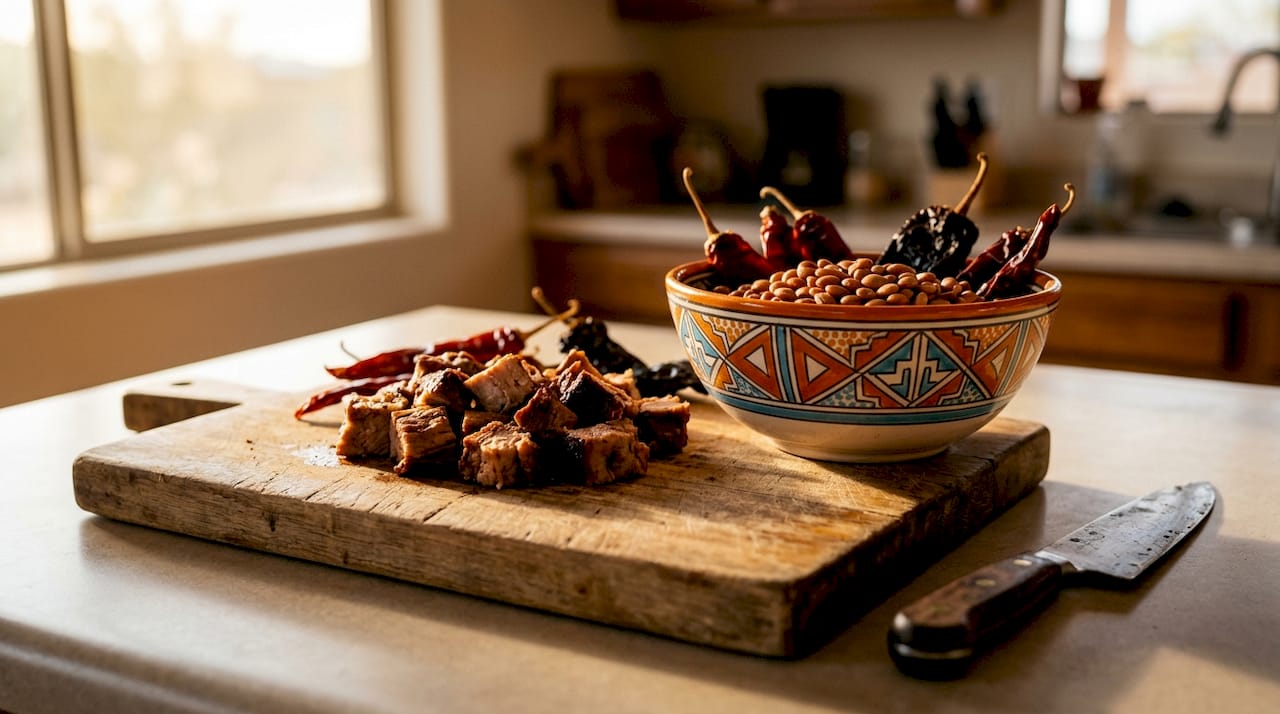
Pro Tip: When shopping for authentic southwest specialty foods, look for tepary beans specifically. These small, drought-resistant beans have a nuttier, denser flavor than standard pinto or black beans and carry genuine pre-colonial culinary history.
2. Iconic Southwest dishes that showcase the region’s diversity
The best southwest dishes are not just flavorful. They are historical documents. Each one reflects a specific cultural moment, a migration, a trade route, or a harvest tradition. Here are the dishes that define the region’s culinary identity.
- Carne adovada: A New Mexico staple of pork braised low and slow in red chile sauce until the meat falls apart. The sauce is built from dried red Hatch chiles, garlic, and oregano. It is served over rice, wrapped in a tortilla, or alongside posole.
- Posole: A hearty hominy stew made with dried corn kernels treated with lime (nixtamalization), pork or chicken, and red or green chile. New Mexico posole is thinner and chile-forward compared to the Mexican version.
- Red and green chile enchiladas: Corn tortillas filled with cheese, chicken, or beef, then smothered in either red or green chile sauce and baked. New Mexico-style enchiladas are stacked flat rather than rolled, which is a regional distinction most visitors miss.
- Chili con carne: The Texas interpretation uses beef, cumin, dried chiles, and no beans. This is a point of fierce regional pride. Beef and cumin form the flavor spine of Tex-Mex cooking, and authentic Texas chili reflects that directly.
- King Ranch casserole: A Texas comfort dish layering tortillas, chicken, Ro-Tel tomatoes, and cream of mushroom soup. It is rich, deeply savory, and a fixture at church potlucks and family gatherings across the state.
- Sonoran hot dog: A bacon-wrapped hot dog nestled in a bolillo-style bun and topped with pinto beans, chopped tomatoes, onion, mayonnaise, mustard, and crema. This is Tucson street food at its most specific and most satisfying.
- Tamales: Masa dough filled with red chile pork, chicken, or cheese and peppers, then wrapped in corn husks and steamed. Tamale-making is a communal tradition across the Southwest, particularly during the winter holidays.
- Navajo tacos: Fry bread topped with seasoned ground beef, beans, lettuce, tomato, and cheese. Fry bread itself has a complicated history tied to forced relocation and government commodity foods, which makes it both a comfort food and a symbol of resilience.
- Green chile cheeseburger: A New Mexico institution. A beef patty topped with roasted Hatch green chile and melted cheese, served on a soft bun. Santa Fe and Albuquerque both claim the best version, and the debate is ongoing.
A practical recipe framework for home cooks: black beans, corn, and cumin form the base of a reliable Southwest-style chili that captures the region’s flavor profile without requiring specialty ingredients. This combination works because the earthiness of black beans, the sweetness of corn, and the warm smokiness of cumin mirror the flavor logic of more complex regional dishes.
3. How desert Southwest food differs from broader Southwestern cuisine
Desert southwest food is a specific culinary category within the larger southwestern cuisine umbrella, and the distinction matters for travelers who want a genuinely unique eating experience. Broader southwestern cuisine includes Tex-Mex, New Mexican, and Colorado-style dishes that incorporate a wide range of ingredients, including tomatoes, cucumbers, and non-native produce. Desert-focused cuisine, particularly in Arizona’s Sonoran region, takes a stricter approach.
Arizona restaurants reviving desert foods actively avoid non-native vegetables like tomatoes and cucumbers, prioritizing pre-colonial crops and desert-native plants instead. This is not a marketing choice. It reflects a genuine commitment to desert food ecology and Indigenous food sovereignty. Chefs at restaurants like Café Roka in Bisbee and Tumerico in Tucson have built menus around this philosophy, using fermentation, preservation, and local sourcing to keep the food both authentic and seasonal.
| Desert Southwest ingredient | Flavor profile | Common use |
|---|---|---|
| Tepary beans | Nutty, dense, slightly sweet | Stews, dips, side dishes |
| Mesquite flour | Sweet, smoky, earthy | Breads, pancakes, cookies |
| Chiltepín chile | Intense, bright, short heat | Salsas, marinades, garnish |
| Nopales (cactus pads) | Tart, slightly vegetal | Grilled sides, salads, tacos |
| Prickly pear fruit | Sweet, watermelon-adjacent | Syrups, drinks, desserts |
Mesquite smoke embodies desert terroir in a way that separates Sonoran cooking from generic Mexican or Tex-Mex flavors. The mesquite tree is native to the Sonoran desert and has been used for fuel, flour, and flavor for thousands of years. When you taste mesquite-grilled meat or mesquite-flour bread, you are tasting a flavor that cannot be replicated outside this specific geography.
Pro Tip: When visiting Tucson, look for menus that specifically list tepary beans, chiltepín, or mesquite as ingredients. These are reliable signals that the kitchen is working within the desert food tradition rather than serving a generic southwestern menu.
The desert food revival is also a preservation movement. Several Indigenous communities in Arizona, including the Tohono O’odham Nation, have partnered with chefs and food organizations to reintroduce heritage crops and traditional preparation methods. This gives desert southwest specialty foods a cultural weight that goes well beyond taste.
4. What travelers should know when ordering Southwest specialty foods
Ordering confidently in the Southwest requires a small amount of regional knowledge that most travel guides skip entirely. The most important thing to understand before sitting down at a New Mexico restaurant is the state’s official culinary question.
-
Answer “Red or green?” New Mexico has designated “Red or green?” as its official state question. When your server asks this, they are asking which chile sauce you want on your dish. Red is earthier and deeper. Green is brighter and fresher. “Christmas” means both, which is the right answer if you cannot decide and want to experience the full range.
-
Read the menu for native ingredient signals. Menus that list tepary beans, chiltepín, nopales, or mesquite are signaling a commitment to desert-native cooking. Generic menus that list “black beans” and “salsa” without specificity are likely serving a standardized version of southwestern cuisine rather than a regionally specific one.
-
Know your chile source. Bueno Foods, founded in 1951, is one of New Mexico’s most important chile processors, supplying roasted and frozen Hatch chiles to restaurants and grocery stores across the region. Seeing Bueno Foods products on a menu or in a kitchen is a reliable indicator of authentic New Mexico chile flavor.
-
Avoid the airline confusion. Searching for “Southwest food” online will surface results about Southwest Airlines snack offerings, including co-branded cookies with Siete Foods. These are entirely unrelated to the regional cuisine. When searching for authentic food experiences, add “cuisine,” “recipes,” or a city name to your search to filter out airline results.
-
Pair your food with regional beverages. Prickly pear margaritas are the most iconic Southwest drink, made with prickly pear syrup, tequila, and lime. Horchata, a sweet rice and cinnamon drink, pairs well with spicy dishes because the sweetness tempers heat. Agua fresca made with hibiscus (jamaica) or tamarind is widely available and refreshing alongside heavier stews.
-
Time your visit around chile season. Hatch chile harvest runs from late August through September. During this window, roadside roasters appear across New Mexico and Arizona, filling the air with the unmistakable scent of charring chiles. Buying freshly roasted Hatch chiles during this period and freezing them is standard practice for locals and a genuine culinary souvenir for travelers.
-
Seek out spicy southwestern recipes at local markets. Farmers markets in Tucson, Santa Fe, Albuquerque, and Phoenix regularly feature vendors selling heritage grain tortillas, tepary bean dips, mesquite flour products, and house-made chile sauces. These markets are often the best place to taste southwest specialty foods in their most direct, unmediated form.
Key takeaways
Southwest food is most authentically experienced through its foundational ingredients: chiles, corn, beans, and desert-native plants that reflect thousands of years of Indigenous and multicultural culinary tradition.
| Point | Details |
|---|---|
| Core ingredient framework | Chiles, corn, beans, and squash define every authentic Southwest dish across all subregions. |
| Desert vs. broader Southwest | Desert southwest food avoids non-native produce and centers pre-colonial crops like tepary beans and mesquite. |
| Red or green chile | New Mexico’s official state question signals a meal-defining choice, not a condiment preference. |
| Regional producers matter | Companies like Bueno Foods ensure consistent, authentic Hatch chile flavor across New Mexico dining. |
| Traveler ordering strategy | Look for tepary beans, chiltepín, and mesquite on menus as reliable signals of desert-native cooking. |
Why the Southwest table is the most honest food story in America
I have eaten in a lot of regions that claim deep culinary roots, and most of them are telling a partial story. The Southwest is different. When you sit down to a bowl of posole in Albuquerque or a plate of carne adovada in a roadside diner outside Española, you are eating something that connects directly to pre-colonial agriculture, Spanish colonial trade routes, and the daily cooking of families who have lived in this landscape for generations.
What strikes me most about southwestern food traditions is how little they need to perform. There is no elaborate plating, no foam, no reduction drizzled in a spiral. The food earns its place through flavor density and cultural honesty. A properly made red chile sauce, built from dried Hatch chiles that have been toasted and rehydrated, has a complexity that rivals any French mother sauce. Most people who have only eaten Tex-Mex at a chain restaurant have never tasted this.
The desert food revival happening in Tucson right now is the most exciting culinary movement I have seen in years. Chefs are not inventing new flavor combinations. They are recovering old ones, working with Tohono O’odham farmers and seed banks to bring back ingredients that nearly disappeared. Eating tepary beans at a Tucson restaurant is not a novelty. It is a small act of cultural restoration.
My practical advice: do not plan your Southwest food trip around restaurant rankings. Plan it around ingredients. Find the Hatch chile roaster. Find the market selling mesquite flour. Find the grandmother selling tamales from a cooler outside a hardware store. That is where the real southwest food culture lives.
— Trevor
Taste the Southwest with Arizonaswag

The Southwest’s food culture runs deeper than any single dish. It lives in the ingredients, the traditions, and the people who grow and cook them. At Arizonaswag, we celebrate that same spirit through bold, desert-inspired designs that carry Arizona’s identity into everyday life. From terracotta-toned tees to Saguaro-print totes, every piece reflects the landscape and culture that makes this region worth exploring. If you love the flavors of the desert Southwest, you will feel right at home in our collections. Support local Arizona culture and explore our full range of Arizona-inspired apparel and accessories at Arizonaswag.
FAQ
What is southwest food exactly?
Southwest food is a regional American cuisine built on Indigenous, Spanish, Mexican, and Anglo culinary traditions, centered on chiles, corn, beans, and squash. It spans subregions including New Mexico, Arizona, Texas, and Colorado, each with distinct flavor profiles and signature dishes.
What makes desert southwest food different from Tex-Mex?
Desert southwest food prioritizes pre-colonial, desert-native ingredients like tepary beans, mesquite, chiltepín, and nopales, while Tex-Mex relies more heavily on beef, cumin, and non-native produce. The desert tradition reflects Indigenous food ecology rather than a fusion of Mexican and American fast-casual cooking.
What does “Red or green?” mean in New Mexico?
“Red or green?” is New Mexico’s official state question, asking diners which Hatch chile sauce they want on their dish. Red chile is earthier and deeper in flavor, green chile is brighter and fresher, and “Christmas” means both sauces served together.
Where can I find authentic southwest specialty foods?
Farmers markets in Tucson, Santa Fe, Albuquerque, and Phoenix are reliable sources for heritage tortillas, tepary bean products, mesquite flour, and house-made chile sauces. During Hatch chile season in late August and September, roadside roasters across New Mexico and Arizona offer freshly roasted chiles for purchase.
Is southwest food always spicy?
Southwest food ranges from mild to intensely hot depending on the chile variety and preparation. Dishes built on dried red Hatch chiles tend toward deep, moderate heat, while chiltepín-based salsas and green chile sauces can be significantly hotter. Most restaurants offer heat level options, and asking your server is always the right move.


