

TL;DR:
- Streetwear is rooted in American youth cultures like hip-hop, skate, punk, and Japanese fashion.
- It emphasizes authenticity, community, bold graphics, limited drops, and self-expression over trends.
- Arizona streetwear combines urban style with desert-inspired colors and local symbolism for cultural pride.
Streetwear is one of the most misunderstood styles in fashion today. Many people picture it as simply oversized hoodies, hype sneakers, and loud logos, but that reading barely scratches the surface. At its core, streetwear is a living cultural language spoken through bold graphics, personal expression, and a deep connection to community. It grew from some of the most creative, rebellious corners of American youth culture and spread across the globe. This guide traces that journey, breaks down what truly defines the style, and shows you how to make it yours, especially with the rich, desert-driven identity that makes Arizona streetwear so distinct.
Table of Contents
- The origins of streetwear: From subculture to global movement
- How streetwear became a fashion powerhouse
- Key elements of streetwear style: What sets it apart
- Choosing and styling streetwear: Trends, quality, and Arizona pride
- Why authentic streetwear is about more than clothes
- Explore Arizona-inspired streetwear you’ll love
- Frequently asked questions
Key Takeaways
| Point | Details |
|---|---|
| Streetwear’s diverse origins | Streetwear brings together hip-hop, skate, surf, punk, and international influences for a rebellious, unique fashion culture. |
| Major industry disruptor | Now a $185B+ global powerhouse, streetwear’s collaborations and resale market have changed how we value and shop for apparel. |
| Self-expression matters | Streetwear’s core is individuality, letting you blend global trends with personal and regional stories, like Arizona-inspired designs. |
| Quality over hype | In 2026, durable fabrics and meaningful style trump fleeting trends—choose pieces that last and represent your true self. |
The origins of streetwear: From subculture to global movement
To understand what makes streetwear more than just clothing, let’s trace its storied past.
Streetwear is a casual clothing style originating from the 1970s and 1980s fusion of New York hip-hop, California surf and skate cultures, punk DIY, and later Japanese street fashion. That combination is what makes it so layered and so durable as a style movement. No single city, artist, or brand owns it. It grew from many directions at once.
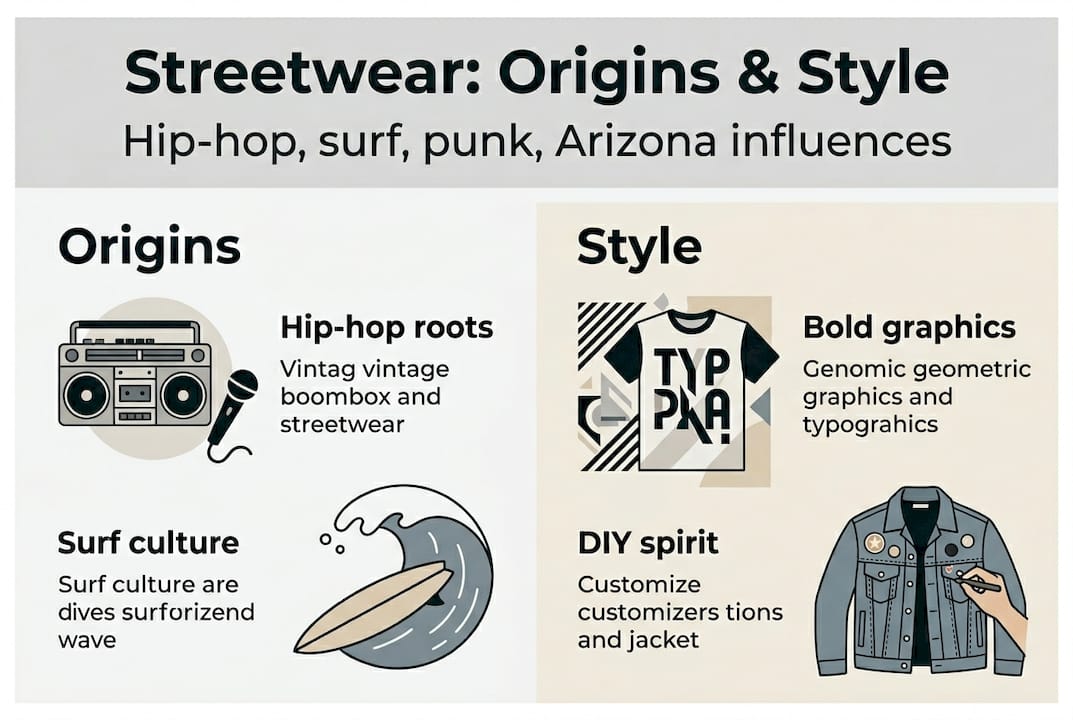
In New York, hip-hop was reshaping music, language, and visual identity. Young people in the Bronx and Harlem used fashion to signal belonging and pride when mainstream culture largely ignored them. Track suits, fitted caps, and unlaced sneakers were not random choices. They were deliberate statements. Dapper Dan, a Harlem-based designer, became a pioneer by reworking luxury logos onto custom garments for artists and athletes who otherwise had no seat at the fashion table. His work was bold, irreverent, and deeply rooted in community.
Out west, a parallel story was unfolding. Shawn Stüssy began selling surfboards and printing signature graphics on T-shirts in Laguna Beach, California. Those tees caught the attention of skaters, punk kids, and hip-hop fans alike, crossing subculture lines effortlessly. Stüssy helped birth the idea of the graphic tee as a cultural artifact, a piece that communicated who you were and what scene you belonged to.
Punk culture added another thread. The DIY (do-it-yourself) spirit of punk pushed young people to customize their own clothes, screen-print their own graphics, and reject mass-market fashion. This anti-fashion rebellion sits at the heart of streetwear’s identity. The goal was never to follow trends dictated from Paris or Milan. It was to create something authentic to your own reality.
Japanese street fashion, particularly from the Harajuku district in Tokyo, brought a meticulous aesthetic sensibility into the mix. Japanese collectors and designers treated streetwear with a reverence that elevated it further, turning limited-edition pieces into cultural objects worth preserving and trading. This influence is why the global streetwear community today takes craftsmanship and detail so seriously.
Here is a quick overview of the founding subcultures that shaped streetwear:
- New York hip-hop: Track suits, caps, sneakers, and bold logos as cultural identity
- California surf and skate: Graphic tees, board shorts, and casual freedom of movement
- Punk DIY: Customized garments, screen printing, and anti-establishment messaging
- Japanese street fashion: Precision, limited editions, and collector culture
“Fashion is not something that exists in dresses only. Fashion is in the sky, in the street. Fashion has to do with ideas, the way we live, what is happening.” This spirit captured what streetwear always understood intuitively.
Arizona fits naturally into this origin story. The state has long been home to a diverse, self-expressive youth culture shaped by Indigenous heritage, Latin influence, desert landscapes, and a creative community that refuses to be boxed in. Understanding Arizona identity in apparel means recognizing that same drive to create something authentic to your own place and people. The rebellious roots of streetwear and the proud, independent spirit of Arizona are genuinely well-matched.
How streetwear became a fashion powerhouse
With a firm grasp on its underground roots, let’s see how streetwear disrupted and ultimately transformed the fashion world.
What began as a niche style born from youth rebellion grew into an enormous global industry. The global streetwear market reached approximately $185 to $218 billion in recent years, with projections pointing toward $265 billion by 2031 at a compound annual growth rate of around 4%. The sneaker resale market alone is valued at $30 billion and grows at 12% annually. These are not niche numbers. Streetwear now rivals or outpaces many traditional fashion sectors.
The leap from underground to mainstream did not happen overnight. It moved in stages, with each decade adding new players and new energy.
The 1990s saw streetwear brands like Supreme, FUBU, and Cross Colours build loyal cult followings. These brands spoke directly to urban youth and hip-hop communities, combining sharp graphics with authentic cultural messaging. Supreme, in particular, mastered the art of scarcity by releasing limited quantities and building anticipation around every drop.
The 2000s brought collaborations between streetwear brands and luxury fashion houses. Nike partnered with artists and designers. Kanye West bridged hip-hop and high fashion with his Yeezy line. Louis Vuitton worked with artist and designer Takashi Murakami, and the walls between street and luxury began to dissolve. Streetwear evolved from subculture anti-fashion into a genuine force shaping high-fashion collections, with cult luxury hybrids like Rick Owens blurring every boundary further.
The 2010s were defined by hype culture, influencer marketing, and the explosion of resale platforms. A sneaker pair released for $180 retail could flip for $800 on the secondary market hours later. Streetwear became an asset class. Collectors tracked drops like stock prices. Resale culture grew its own ecosystem of apps, newsletters, and bots.
Here is a comparison of traditional fashion versus streetwear on key dimensions:
| Feature | Traditional fashion | Streetwear |
|---|---|---|
| Design cycle | Seasonal (2x yearly) | Drop-based (anytime) |
| Target audience | Broad, aspirational | Community-specific |
| Price positioning | Premium to luxury | Wide range, resale-driven |
| Cultural roots | European fashion houses | Youth subcultures |
| Marketing style | Runway and editorial | Social media and influencer |
| Scarcity model | Wide retail distribution | Limited edition drops |
| Customization | Rare | Central to identity |
The current phase, particularly the 2026 shift, is equally interesting. Consumers are moving away from hype for hype’s sake and toward quality, durability, and pieces with genuine cultural meaning. Technical fabrics, outdoor-inspired details, and eco-conscious materials are gaining traction. This evolution rewards brands that lead with craftsmanship and story. Local branding in streetwear is a growing part of this shift, as communities increasingly look for apparel that reflects their specific place and identity rather than chasing global hype labels.
Arizona fits into this evolution with a clear opportunity. Locally rooted, desert-inspired streetwear that carries genuine cultural meaning is exactly what thoughtful consumers are gravitating toward right now.
Key elements of streetwear style: What sets it apart
Now that streetwear’s influence is global, what exactly defines this one-of-a-kind style? Here’s how to spot and style it.
Streetwear has a visual language that is recognizable once you know what to look for. It combines comfort, boldness, and self-expression in a way that traditional fashion rarely does. Understanding its key elements helps you build a wardrobe that feels cohesive, intentional, and genuinely yours.
The core staple pieces of streetwear include:
- Graphic tees: The most foundational piece. Graphics communicate cultural allegiance, artistic taste, humor, or local pride. A strong graphic tee does the talking.
- Hoodies: Heavy weight, well-constructed, and often featuring bold prints or embroidery. A quality hoodie is a streetwear cornerstone.
- Sneakers: Footwear carries enormous weight in streetwear culture. Classic silhouettes, limited collaborations, and clean upkeep all signal authenticity.
- Hats: Fitted caps, snapbacks, and dad hats serve as both style anchors and identity markers.
- Cargo pants and joggers: Practical, relaxed, and versatile. These bottoms balance oversized tops and complete a streetwear silhouette.
- Statement accessories: Bags, totes, socks, and jewelry add personality without competing with the main fit.
Beyond specific pieces, streetwear is built on signature style principles. Bold, original graphics are central. Limited-edition releases create a sense of exclusivity and community among those who track drops. Personalized touches, like custom patches, painted details, or locally sourced pieces, honor streetwear’s DIY origins. Color plays a major role too. While classic streetwear often leans into black, white, and earth tones, Arizona-inspired streetwear brings in terracotta, rust, sand, and sage green, colors drawn directly from the desert landscape.
Wearing bold graphic tees is an art form in streetwear culture. The goal is to let the graphic lead without competing with too many other loud elements in the same outfit. Pair a detailed desert-motif tee with clean neutral joggers and simple sneakers, and the graphic becomes the focal point it deserves to be.

62% of Gen Z identify with streetwear as a form of self-expression rather than just fashion. That statistic says a lot about why this style has lasted decades. It is not trend-driven in the way seasonal runway fashion is. It is identity-driven, and identity is deeply personal.
Arizona’s own cultural mosaic, its Indigenous roots, its Sonoran Desert beauty, its Latin heritage, and its creative independent community, gives you an incredibly rich set of symbols, colors, and stories to draw from. Incorporating saguaro cactus silhouettes, geometric patterns inspired by Native American textile traditions, or bold desert sunset palettes into your streetwear choices connects your look to something real and specific. That connection is exactly what streetwear’s founders were reaching for.
Understanding what separates a well-made piece from a cheaply produced imitation matters here. Premium apparel qualities include thick, stable fabric weight, double-stitched seams, colorfast graphics that do not crack after a few washes, and construction that holds its shape over time. In streetwear, quality is respect for the culture.
Pro Tip: Start with two or three anchor pieces that reflect your Arizona identity, a tee with a desert graphic, a hoodie in a warm earth tone, and a hat with local significance. Build your fits around those anchors and let your personality fill in the rest.
Choosing and styling streetwear: Trends, quality, and Arizona pride
Once you know what to look for, making streetwear personal and Arizona-proud is all about your choices.
Shopping for streetwear in 2026 requires a sharper eye than it did ten years ago. The market is crowded, and not every brand that uses bold graphics and a dropped shoulder seam is delivering genuine value. Knowing what to prioritize keeps your wardrobe strong and your spending intentional.
The 2026 shift toward quality and durability over pure hype is reshaping what smart buyers look for. Technical fabrics, weather-resistant finishes, and functional details like reinforced pockets and adjustable cuffs are becoming standard expectations rather than nice-to-haves. Outdoor and technical integration is also growing, with many streetwear pieces borrowing construction techniques from performance wear while maintaining that signature expressive aesthetic.
Here is a practical checklist for evaluating any streetwear purchase:
- Fit: Does it match your body and the silhouette you want? Streetwear often runs oversized intentionally, but sloppy is different from relaxed. Know the difference.
- Fabric feel: Is the weight substantial? A quality hoodie should feel heavy in your hands. A tee should not be see-through or papery.
- Graphic quality: Is the print screen-printed with thickness and detail, or is it a thin iron-on transfer? Rub gently with a damp cloth to check for colorfastness.
- Stitching: Check seams at the shoulders, cuffs, and hem. Double stitching indicates care and durability.
- Authenticity: Does the brand have a real story and connection to a community, or does it mimic the aesthetic without any roots?
- Arizona pride: Does the piece reflect something true about this place? Desert colors, local symbols, and Arizona-specific design choices add meaning that generic streetwear cannot replicate.
Here is a quick comparison of trending streetwear materials in 2026:
| Material | Key benefit | Arizona relevance |
|---|---|---|
| Technical fleece | Lightweight warmth and moisture management | Perfect for cool desert nights |
| Heavyweight cotton | Durability and print quality | Ideal for bold graphic tees |
| Recycled polyester | Eco-friendly and moisture-wicking | Aligns with desert sustainability values |
| French terry | Soft texture and breathability | Great for Arizona’s transitional seasons |
| Organic cotton | Chemical-free comfort | Premium feel with environmental benefit |
Creating unique Arizona streetwear looks comes down to combining globally recognized streetwear silhouettes with locally specific design choices. Try pairing a technical hoodie in a rust or terracotta colorway with clean cargo pants and white sneakers. Add a tote bag with a saguaro print and a snapback with an Arizona graphic, and you have built a fit that reads streetwear internationally while telling an Arizona story unmistakably.
When it comes to streetwear shopping tips, leaning toward locally produced or locally inspired brands gives you a distinct advantage. You get pieces with genuine cultural meaning, you often get better access to the designer’s intent, and you support a creative community that makes Arizona’s fashion scene richer for everyone.
Current trends worth knowing in 2026 include technical hoodies with utility pockets, earth-tone colorways moving away from neon and toward natural desert palettes, eco-friendly material choices gaining real traction, and local artist collaborations that bring original artwork directly to wearable form. Streetwear has always valued originality. Local collaborations deliver exactly that. Understanding streetwear quality means recognizing that the best pieces combine visual impact with construction that lasts.
Pro Tip: Shopping locally for Arizona-made or Arizona-inspired streetwear does more than upgrade your wardrobe. It supports the creative community that makes this place so vibrant, and it gives you access to designs that cannot be found anywhere else in the world.
Why authentic streetwear is about more than clothes
Here is something that does not get said often enough in streetwear conversations: the brands and logos you wear matter far less than the story you carry into the fit.
We have watched streetwear get packaged, commodified, and marketed to the point where some people think buying a $400 hoodie from a prestigious label automatically makes them part of the culture. It does not. Streetwear was never about expensive gear. It was about honest self-expression from communities that mainstream fashion ignored.
Authenticity in streetwear means honoring where you come from. It means choosing pieces that reflect your community, your roots, and the visual identity of your place. For those of us connected to Arizona, that means looking to the desert landscape, the rich Indigenous and Latin cultural traditions, and the warm, bold, earthy palette that defines this part of the world.
Arizona streetwear stands out because it does not need to borrow its identity from New York or Los Angeles. The state’s own cultural blend of old and new, traditional and modern, is more than enough to fuel a distinct visual language. When you wear a piece with a saguaro silhouette or a geometric pattern drawn from Southwestern textile traditions, you are not just wearing art. You are showing Arizona pride in a way that carries real weight.
The most memorable streetwear fits we have ever seen were not the most expensive. They were the most honest. They told you something real about the person wearing them. That is the standard worth chasing.
Explore Arizona-inspired streetwear you’ll love
Ready to level up your wardrobe with pieces that celebrate both urban cool and Arizona authenticity?
At Arizona Swag, we design every piece to carry that intersection of bold streetwear energy and genuine desert-state pride. Our collections feature graphic tees, premium hoodies, and statement accessories built for people who want their style to say something real.
Whether you are drawn to terracotta and rust colorways, bold saguaro graphics, or clean desert-minimalist designs, you will find pieces here that feel like Arizona. Browse our full collection at Arizona Swag and discover hoodies, tees, hats, and totes crafted for comfort, built to last, and designed to tell a story worth wearing. We are a family-owned business, and every piece we put out reflects our genuine love for this state. Come find your fit.
Frequently asked questions
Who started streetwear fashion?
Shawn Stüssy with surf T-shirts and Dapper Dan’s Harlem customizations were among streetwear’s earliest pioneers, blending subcultural energy with bold visual identity.
Is streetwear expensive?
Prices range widely, from affordable graphic tees to collector pieces worth thousands, but hype and limited editions can drive costs high, fueling an active $30 billion sneaker resale market growing 12% annually.
What makes streetwear unique from other styles?
Streetwear fuses hip-hop, skate, and punk cultural roots with expressive graphics and a DIY spirit, prioritizing personal identity over seasonal trends dictated by traditional fashion houses.
How do I style streetwear with Arizona influences?
Blend relaxed silhouettes and bold graphics with desert colors like terracotta, rust, and sand, and look for pieces featuring local symbols, Arizona-made brands, or Southwestern-inspired patterns for a look that is genuinely your own.


