

TL;DR:
- Clothing actively constructs and communicates social identity and regional pride.
- Arizona apparel reflects cultural heritage, regional motifs, and personal values, enhancing self-expression.
- Wearing meaningful, regionally inspired clothing influences mood, confidence, and social belonging.
Clothing tells a story before you say a word. Observers can often accurately perceive social identities from clothing cues alone, yet most people still think of fashion as something shallow or purely decorative. That gap between what people believe about clothing and what it actually does is where identity is quietly built. In Arizona, that process is especially vivid. The desert landscape, the Southwestern culture, and the bold, earthy aesthetic of the region all feed into a regional fashion identity that feels both specific and deeply personal. What you put on your back each morning is not just a choice about comfort or style. It is a statement about where you come from, what you value, and who you belong with.
Table of Contents
- Why apparel matters for identity and belonging
- The psychology of clothing: Enclothed cognition and self-image
- Apparel, cultural capital, and taste hierarchies: The Arizona perspective
- Real-world impact: Apparel as identity signal in Arizona culture
- Our take: How apparel can empower Arizona identity without falling into ‘fashion traps’
- Show your Arizona identity with local apparel
- Frequently asked questions
Key Takeaways
| Point | Details |
|---|---|
| Apparel shapes perceptions | Your clothing instantly signals your identity, values, and social belonging. |
| Regional pride matters | Arizona-inspired apparel helps communicate local pride and authenticity. |
| Psychology of clothing | What you wear affects your mood, confidence, and self-image daily. |
| Cultural capital in fashion | Apparel choices can both reinforce and challenge social hierarchies. |
| Sustainability and authenticity | Choosing sustainable, regionally-inspired apparel empowers true self-expression. |
Why apparel matters for identity and belonging
Clothing is not passive. It actively shapes how you construct and communicate your identity to the world around you. Sociologists have long recognized that apparel is a primary mechanism for identity construction and communication, which means what you wear sends a constant, layered message about who you are. That message includes your values, your social group, your cultural ties, and even your aspirations.
Erving Goffman, one of the most influential sociologists of the 20th century, framed everyday social interaction as a kind of performance. His impression management theory argues that clothing acts as a tool for curating the impressions others form of you. In other words, apparel is the costume of your social performance. You choose it deliberately, even when it feels instinctive, and it shapes how others respond to you before a single word is exchanged.
For millennials, this is not abstract theory. It is lived practice. Research consistently shows that younger adults use clothing strategically to define belonging within social groups, to differentiate themselves from others, and to project a self-image that aligns with their values. In Arizona, expressing Arizona identity through apparel adds a specific regional layer to this process. Desert motifs, terracotta color palettes, turquoise accents, and saguaro-printed tees are not random choices. They signal something specific about where you belong.
Here is a quick look at how different apparel functions relate to identity:
| Apparel function | Identity signal | Arizona example |
|---|---|---|
| Belonging | Group membership, shared values | Arizona-branded hoodie |
| Differentiation | Unique taste, individuality | Custom desert-motif graphic tee |
| Self-presentation | Values, aspirations, personality | Sustainable locally-made tote |
| Regional pride | Cultural connection, place identity | Saguaro or canyon print apparel |
Some of the clearest ways apparel builds belonging include:
- Shared colors and motifs that create visual group cohesion
- Regional designs that signal a shared sense of place
- Fabric and craft quality that communicate values like sustainability or craftsmanship
- Brand affiliations that align with lifestyle identities
Arizona’s fashion landscape is particularly rich for this kind of identity signaling. The region’s aesthetic borrows from Native American geometric patterns, Spanish Colonial influences, and the raw beauty of the desert itself. When you wear a piece that reflects those influences, you are participating in a visual culture that goes back generations. That is a meaningful form of showing Arizona pride through what you wear every day.
The psychology of clothing: Enclothed cognition and self-image
Beyond social signaling, clothing works on you from the inside. Psychologists have identified a phenomenon called enclothed cognition, which refers to the way the symbolic meaning of what you wear influences your actual thinking, mood, and behavior. Enclothed cognition demonstrates that wearing clothing with specific symbolic meanings alters cognitive processes, not just social perception.
In plain terms: wearing clothes that feel meaningful to you changes how you think and act. If you pull on a bold Arizona graphic tee that represents something you genuinely love about where you live, that feeling is not just sentimental. It is cognitive. You are more likely to feel grounded, confident, and purposeful.
This matters a great deal for mental health and well-being. Fashion and mental health are more connected than most people realize. Personal style can function as psychological anchoring, a daily ritual that reinforces who you are, especially during periods of change or stress. For young adults navigating shifting identities and social environments, that kind of stable self-expression through clothing is genuinely valuable.
Arizona’s warm, desert-inspired color palette plays right into this. Earthy terracotta, burnt sienna, sandy beige, and sky blue are colors with known psychological associations to warmth, calm, and groundedness. Wearing them is not just aesthetically pleasing. It can actually shape your emotional tone for the day.
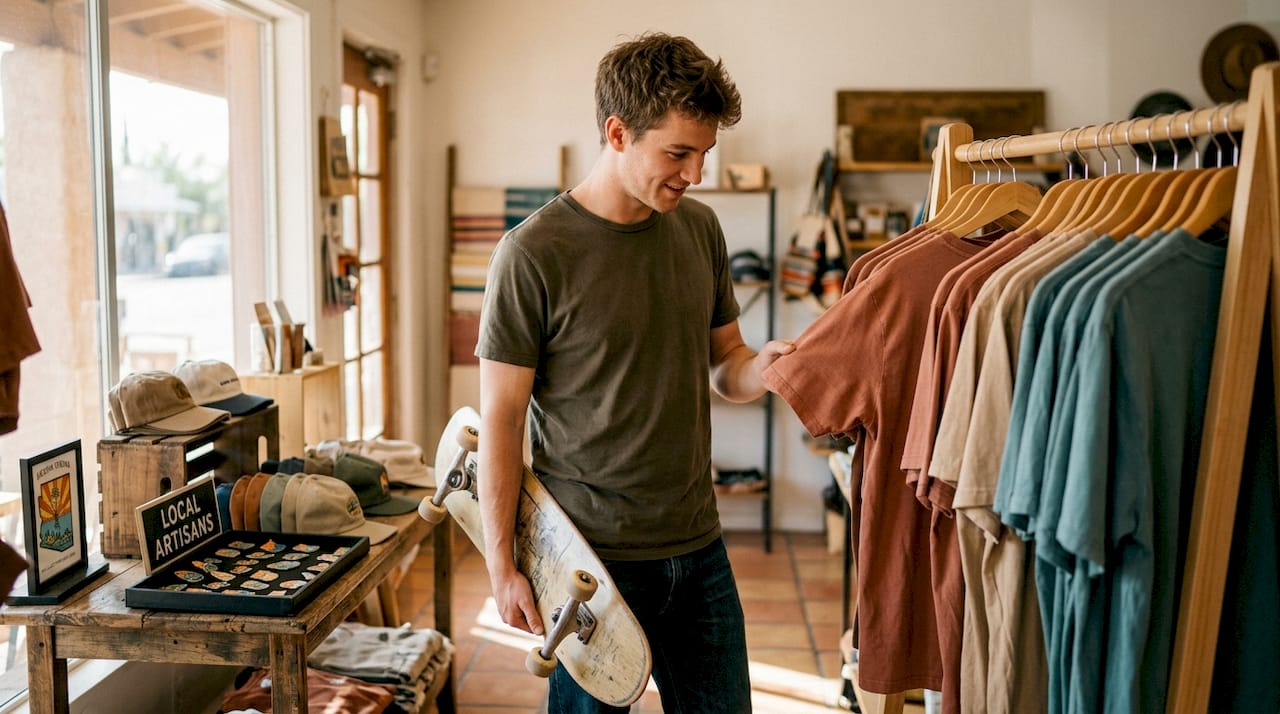
Here is how the psychological effects of specific apparel choices tend to play out:
| Clothing attribute | Psychological effect | Practical example |
|---|---|---|
| Bold regional print | Increased confidence and identity clarity | Arizona graphic tee with canyon motif |
| Earthy tones | Calm, grounded mood | Terracotta-colored hoodie |
| Sustainable material | Sense of integrity and values alignment | Organic cotton desert-print tote |
| Streetwear silhouette | Energy, social readiness | Relaxed-fit Arizona-branded crewneck |
To use this practically, try these steps:
- Identify what emotional tone you want to set for the day before choosing your outfit.
- Match your color choice to that intention, earthy tones for calm, bold prints for confidence.
- Choose designs that carry personal meaning, not just trend appeal.
- Invest in pieces that feel authentic to your regional identity, not just your current mood.
- Build a small core wardrobe of items that consistently make you feel like yourself.
Pro Tip: When you browse Arizona graphic tee styles, pay attention to which designs make you feel an immediate emotional response. That reaction is enclothed cognition at work. Choose the pieces that consistently anchor your best self.
If you want to go further with Arizona streetwear looks, think about building outfits around a consistent visual identity. A cohesive personal style reinforces your sense of self every time you get dressed.
Apparel, cultural capital, and taste hierarchies: The Arizona perspective
Sociologist Pierre Bourdieu introduced the concept of cultural capital to describe the non-financial social assets that signal status and taste. In fashion, this plays out constantly. Apparel choices signal class distinctions and taste hierarchies, reinforcing social power in ways that are often invisible but deeply felt.
In Arizona, this dynamic is visible across several distinct fashion camps. There is the luxury resort aesthetic, polished and understated. There is the streetwear scene, loud, referential, and community-oriented. And there is a growing sustainable fashion movement, which prioritizes material transparency and environmental responsibility over brand prestige.
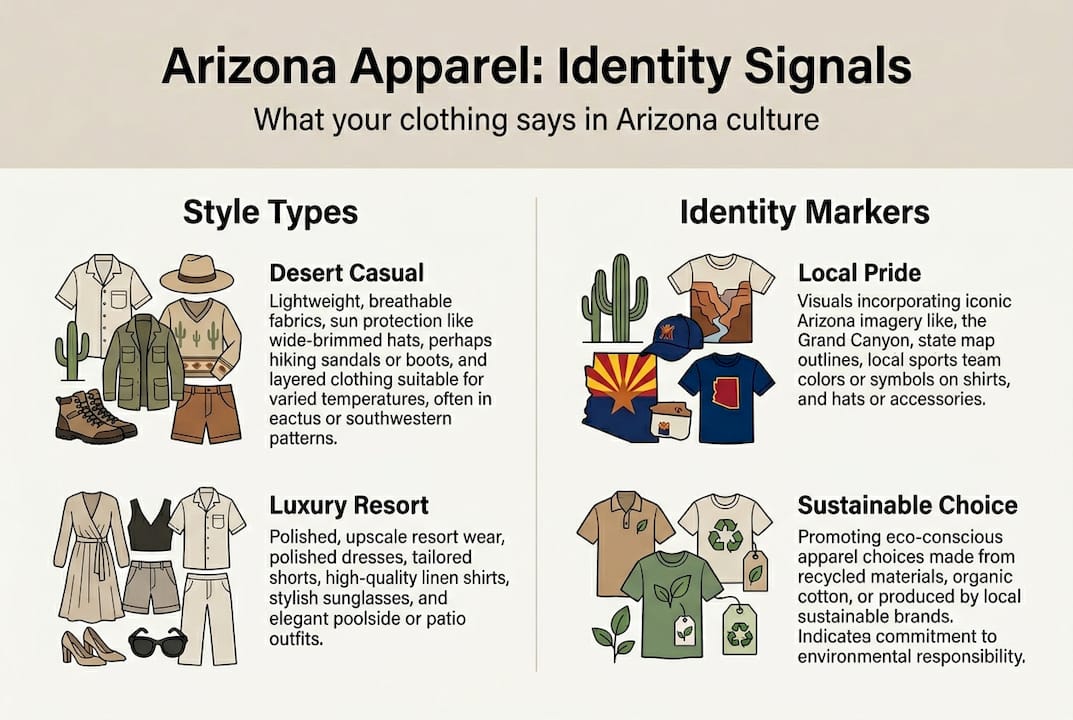
Each of these groups uses apparel to signal belonging and values, but they do it through different visual languages. Symbolic domination in luxury fashion can make people feel pressure to access expensive items as a marker of status. That pressure is real, and it affects how people relate to clothing as an identity tool.
Millennials, in particular, have pushed back on this hierarchy. Sustainable apparel choices are now recognized as a form of identity reinforcement, especially among younger consumers who want their purchases to reflect their values. Wearing locally inspired, ethically made apparel is a way of opting out of status-driven fashion hierarchies and into something more personally meaningful.
For Arizona residents and fans of the state’s aesthetic, Arizona desert fashion occupies a unique position in this landscape. It is neither purely luxury nor purely streetwear. It draws on both, while adding the regional dimension of place-based identity.
Here is how different Arizona apparel types map to their social meanings:
- Bold graphic tees: Communicate creativity, regional pride, and accessibility
- Premium hoodies with desert motifs: Signal comfort-forward style with cultural awareness
- Sustainable tote bags with Arizona prints: Reflect environmental values and community identity
- Streetwear silhouettes with local imagery: Bridge urban fashion and regional heritage
- Minimalist Arizona-branded accessories: Suggest a quiet, confident sense of local belonging
The key insight here is that you do not need to chase expensive labels to communicate meaningful taste and identity. Locally inspired pieces, especially those made with care and rooted in Arizona’s visual culture, carry genuine cultural capital of their own.
Real-world impact: Apparel as identity signal in Arizona culture
Theory is useful, but the real test is how apparel functions in everyday Arizona life. Whether you are walking through a Phoenix farmers market, hiking near Sedona, or grabbing coffee in Tucson’s arts district, what you wear sends signals that others read quickly and often accurately.
Empirical studies show that observers can accurately perceive social identities from clothing cues, which means the people around you are already interpreting your outfit as a social document. The question is not whether your clothing sends a signal. It is whether that signal reflects who you actually are.
Arizona’s regional motifs are powerful in this context precisely because they are specific. A generic brand logo is readable but vague. A saguaro cactus print, a Southwestern geometric pattern, or an earthy terracotta colorway signals something particular: a connection to this landscape, this culture, this community.
Some of the most effective Arizona-centric apparel elements for authentic identity signaling include:
- Saguaro and desert flora prints: Instantly readable as Arizona-specific and nature-connected
- Turquoise and terracotta color palettes: Reference the state’s landscape and Native American art traditions
- Geometric Southwestern patterns: Connect to deep regional cultural heritage
- Local brand affiliation: Signals community investment and support for regional businesses
- Fabric choices: Breathable, comfort-focused materials reflect the practical realities of Arizona’s climate
There is also important complexity here. Your outfit does not fully capture your identity. It is one layer of a much richer picture. But it is the layer that others see first, and it shapes the social interactions that follow. That is why apparel and Arizona tourism are so intertwined. Visitors reach for Arizona-themed apparel because they want to carry a piece of the experience home with them. Locals wear it to signal rootedness and pride.
Pro Tip: When choosing promotional Arizona apparel or everyday pieces, prioritize designs that feel genuine to your personal connection with the state. Authenticity reads clearly. People can sense the difference between a piece someone truly loves and one they grabbed because it was on trend.
Our take: How apparel can empower Arizona identity without falling into ‘fashion traps’
Here is something the typical fashion guide will not tell you. Chasing trends is one of the fastest ways to lose your identity rather than express it. The fashion industry moves fast, and if you are constantly pivoting to match what is currently popular, your wardrobe ends up reflecting the market rather than you.
We have seen this pattern play out in the data too. Clothing’s identity role can backfire in mental health contexts, where loss of personal style signals identity erosion, but deliberate dressing genuinely aids recovery. That is not a small finding. It means your relationship with your wardrobe has real psychological stakes.
The answer is not to ignore style trends entirely. It is to use them selectively, filtered through a clear sense of what actually resonates with your values and your regional identity. For Arizona residents and enthusiasts, that means leaning into the desert aesthetic not because it is trendy but because it is true. The earthy tones, the bold prints, the geometric patterns: these are not passing fashions. They are rooted in a landscape and a culture that has been here for centuries.
Deliberate, regionally anchored choices also have a practical benefit. They make apparel quality and craft matter more. When you are buying pieces that carry meaning, you naturally invest in quality over quantity. That is better for your wardrobe, your budget, and your sense of self.
Wear what is actually yours.
Show your Arizona identity with local apparel
Everything you have read here points to one practical conclusion: the most powerful wardrobe is one that reflects your genuine identity. For Arizona fans, that means choosing pieces rooted in the region’s colors, motifs, and values rather than whatever happens to be trending.
At Arizona Swag, we design apparel that does exactly that. Whether you reach for the cozy, desert-ready Gildan Softstyle hoodie or prefer the comfort-first feel of the Ring-Spun Cotton hoodie, each piece is built to carry Arizona’s bold aesthetic with comfort you can feel. These are not just garments. They are wearable expressions of where you belong. Browse the full collection and find the pieces that feel unmistakably like you.
Frequently asked questions
How does apparel impact my identity?
Apparel shapes how others perceive your identity and reinforces your sense of self by signaling belonging, values, and personality through visual cues that others read immediately and often accurately.
Why do people associate regional pride with clothing?
People use locally inspired designs and motifs to visually express their connection to a region, and Arizona-specific apparel signals belonging and authenticity to the surrounding community in ways that generic fashion simply cannot.
Can wearing sustainable apparel impact my social image?
Yes. Sustainable apparel choices demonstrate environmental responsibility and align your identity with socially validated values, particularly among millennials who treat purchasing decisions as extensions of personal ethics.
Does my mood change based on what I wear?
Enclothed cognition research confirms that wearing clothing with certain symbolic meanings can boost confidence, improve mood, and sharpen cognitive function throughout the day.
Are there risks to forming my identity around apparel?
Over-reliance on fashion trends can weaken personal identity, but deliberately choosing apparel that reflects your values helps anchor your sense of self and can actively support mental health and emotional resilience.


