

TL;DR:
- Unisex apparel is designed to be wearable by any gender, featuring neutral silhouettes, relaxed fits, and inclusive sizing. It emphasizes comfort, versatility, and sustainability, leaning often toward masculine origins but evolving to suit diverse body types and regional climates like Arizona’s. Approaching unisex fashion with personal adjustments and regional awareness enhances its functionality and personal expression.
Most people assume unisex apparel is just oversized, shapeless clothing thrown on a rack with a “one size fits all” tag. That assumption misses the point entirely. Unisex apparel is clothing designed to be worn by any gender, featuring neutral silhouettes and relaxed fits that work across a wide range of body types and personal styles. It is a movement that has been reshaping modern fashion for decades, and in 2026, it is more relevant than ever. This guide walks you through exactly what unisex clothing is, how to wear it confidently, and why it matters for your wardrobe.
Table of Contents
- What is unisex apparel? Definitions and history
- Core features of unisex apparel: Fit, design, and style
- Why choose unisex apparel? Key benefits and common critiques
- Unisex apparel in today’s market: Trends, growth, and cultural appeal
- How to wear and style unisex apparel
- The real world of unisex apparel: What most guides won’t tell you
- Discover unisex style with Arizona Swag
- Frequently asked questions
Key Takeaways
| Point | Details |
|---|---|
| Unisex clothing defined | Unisex apparel is designed for all genders, using relaxed fits and neutral style cues. |
| Timeless, versatile design | Unisex pieces are practical and can adapt to any wardrobe, offering both comfort and easy styling. |
| Inclusivity and sustainability | These clothes support body diversity and reduce fashion waste with simple, universal designs. |
| Cultural and market growth | Unisex fashion is rapidly expanding thanks to youthful trends, bold looks, and a demand for comfort. |
| Fit still matters | Finding the right unisex style may take trial and error to match your individual body and taste. |
What is unisex apparel? Definitions and history
Now that you’re curious about unisex apparel, let’s break down exactly what it is and how it rose to prominence.
Unisex apparel is clothing designed to be worn by any gender, featuring neutral silhouettes, relaxed fits, and sizing that accommodates a wide range of body types. The word itself comes from the Latin “uni” meaning one, and “sex” referring to gender, so the concept is literally about one clothing category serving all. But the practical reality is more layered than the definition suggests.
It helps to understand how unisex differs from related terms you’ll see on labels and in fashion media:
- Unisex: Focuses on practical sizing and versatility. Designed to work for multiple body types without drawing attention to gender.
- Genderless: Actively rejects the idea that clothing has any gender at all. Often avant-garde and boundary-pushing in design.
- Gender-neutral: Aims to sit in a middle space, avoiding strong masculine or feminine cues while still following conventional clothing silhouettes.
Harvard research on gender-fluid products notes that unisex focuses on practical sizing and versatility, while genderless and gender-neutral categories specifically challenge cultural norms. Interestingly, the research also highlights that unisex adoption often leans masculine in practice, meaning many pieces originate from traditionally male-coded styles. We’ll revisit that point later in the article.
“Fashion has always reflected cultural shifts. The rise of unisex clothing isn’t a trend, it’s a response to how people actually want to live and dress.”
Historically, unisex fashion has roots in the 1960s hippie movement, when counterculture groups rejected rigid social norms, including those around clothing. Jeans, band tees, and simple tunics became shared staples across genders. The 1970s and 1980s saw further experimentation with androgynous fashion in music culture. By the 1990s, streetwear and skate culture brought unisex basics like hoodies and oversized tees into mainstream retail.
Today, the category is driven largely by Gen Z and Millennials who prioritize self-expression and comfort over traditional fashion rules. Brands across every price point now offer unisex or shared collections as a core part of their lineups, not as an afterthought.
Core features of unisex apparel: Fit, design, and style
With a clear definition in hand, let’s look at the actual features that set unisex apparel apart, starting with what you’ll see on store racks.
Common examples of unisex clothing include oversized blazers, relaxed trousers, minimalistic tees, hoodies, jeans, and jackets with simple designs and neutral colors. These pieces share a set of design principles that make them broadly wearable:
- Relaxed or straight-cut silhouettes that don’t taper sharply at the waist or hips
- Neutral color palettes like charcoal, white, cream, black, sand, and olive
- Minimal or bold graphic elements that aren’t coded as masculine or feminine
- Extended sizing ranges that move beyond traditional small/medium/large gendered categories
- Sturdy, comfortable fabrics such as cotton fleece, brushed jersey, and ring-spun cotton
Here’s a simple comparison to help you see the differences between clothing categories:
| Feature | Unisex | Gendered | Genderless |
|---|---|---|---|
| Fit approach | Relaxed, versatile | Tailored to a specific gender | Deliberately unconventional |
| Sizing system | Shared scale | Separate men’s/women’s | Often free-size or custom |
| Design intent | Practical inclusivity | Expression of gender | Challenge of norms |
| Common examples | Hoodies, tees, jeans | Fitted blouses, men’s suits | Structural avant-garde pieces |
| Price range | Budget to premium | Budget to luxury | Often mid to luxury |
Designing unisex streetwear that truly works for everyone requires intentional pattern engineering to avoid biases toward certain body types. A hoodie that fits broad shoulders well may need extra adjustment at the waist for a different frame. The best unisex pieces are engineered to accommodate, not just to approximate.
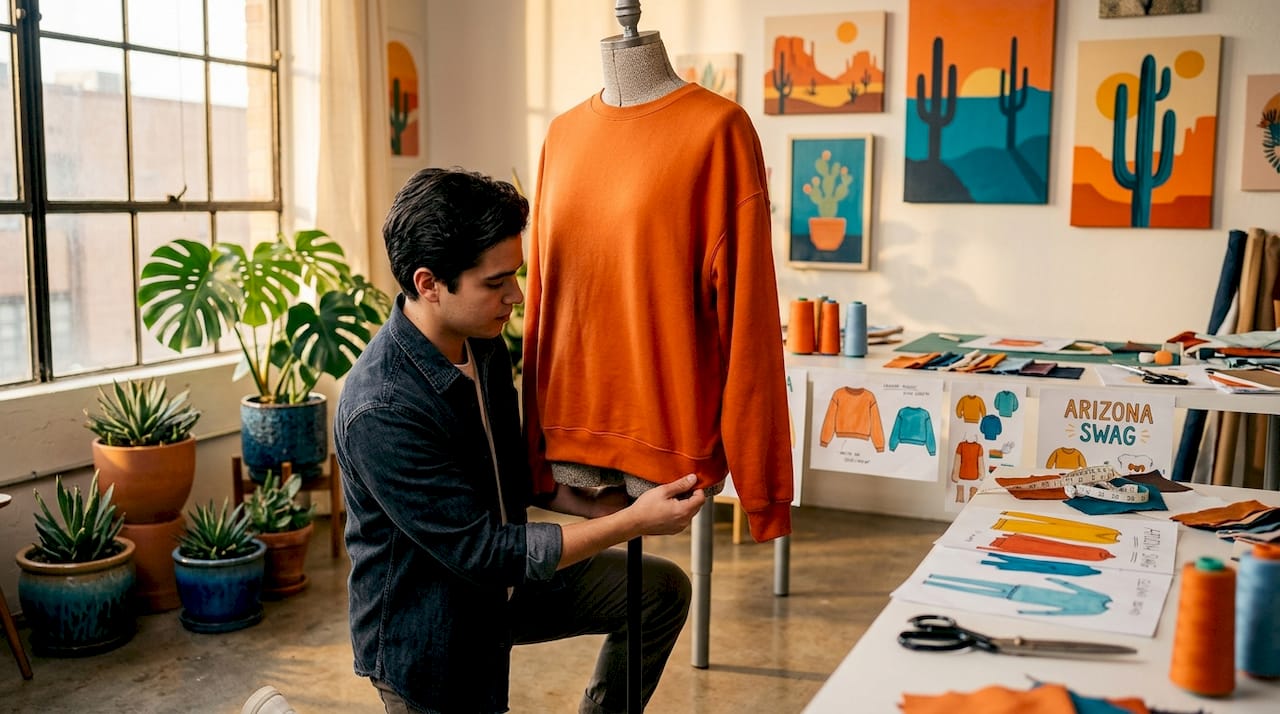
Explore Arizona graphic tee styles that demonstrate how bold desert-inspired graphics can live comfortably on unisex silhouettes. You can also browse unique graphic tees Arizona style to see how regional identity pairs with clean, wearable design. If you want to understand how the desert landscape shapes clothing choices, the desert apparel trends Arizona guide is worth your time.
For broader inspiration on silhouette and structure, unisex streetwear styles rooted in Japanese minimalism offer a clean, confident reference point.
Pro Tip: When shopping unisex, try on or check measurements against your own body rather than relying on the size label. A medium in a unisex hoodie may fit very differently from a medium in a gendered cut. Focus on shoulder seam placement and torso length as your primary fit guides.
Why choose unisex apparel? Key benefits and common critiques
Understanding the design is important, but why do so many people choose unisex pieces, and what should you watch out for?
The appeal of unisex clothing runs deep. Here are the top reasons people are building their wardrobes around it:
- Comfort above all. Unisex pieces are typically designed with ease of movement in mind. The relaxed cuts and soft fabrics mean you’re not fighting your clothes throughout the day.
- Versatility across occasions. A good unisex hoodie can transition from a morning coffee run to a casual dinner without missing a beat. These pieces work hard.
- Inclusive sizing. With shared size ranges, shopping becomes less about fitting a gender category and more about fitting your actual body. That shift matters.
- Sustainability through longevity. Unisex apparel promotes inclusivity and sustainability through versatile, timeless designs that don’t go out of style with the season. When you invest in a well-made unisex piece, you wear it for years, not months.
- Wardrobe simplicity. Fewer, better pieces that work for everyone in a household means less clutter and more intentional dressing.
However, it’s fair to also look at the critiques. Not every claim about unisex clothing holds up under scrutiny.
“Fluid styles often originate from masculine-coded items, which means the shift toward unisex can sometimes reinforce the very norms it aims to dissolve.”
Research from Harvard Business School points out that while gender-fluid fashion is celebrated for breaking binaries, some critiques note it may reinforce male norms, since fluid styles often originate from masculine-coded items. A classic example is the button-down shirt. Marketed as unisex, it is structurally shaped for a male torso and simply scaled up or down rather than re-engineered.
Fit inconsistency is another real issue. Unisex footwear comfort research shows similar challenges, where designs built for an average male foot can feel awkward for a wide variety of other foot shapes and sizes.
For styling advice tailored to bold, confident dressing in the desert heat, check out these Arizona streetwear outfit ideas that pair unisex basics with local flair.
Pro Tip: When you encounter a unisex piece that doesn’t quite fit the way you’d like, don’t walk away immediately. Try tucking, layering, or belting it to shape the silhouette to your body. Unisex clothing rewards a little creative styling.
Unisex apparel in today’s market: Trends, growth, and cultural appeal
Knowing the pros and cons, let’s see where unisex apparel fits into today’s fashion industry and what is driving its evolution.
The numbers are striking. Market size estimates for unisex clothing vary across research sources, but the trajectory is consistently upward. One projection places the market at approximately USD 50 billion in 2023, growing to USD 110 billion by 2033 at a compound annual growth rate of 8.5%. A more conservative estimate tracks the market at USD 3.87 billion in 2024, growing to USD 7.19 billion by 2030 at a CAGR of 10.6%.
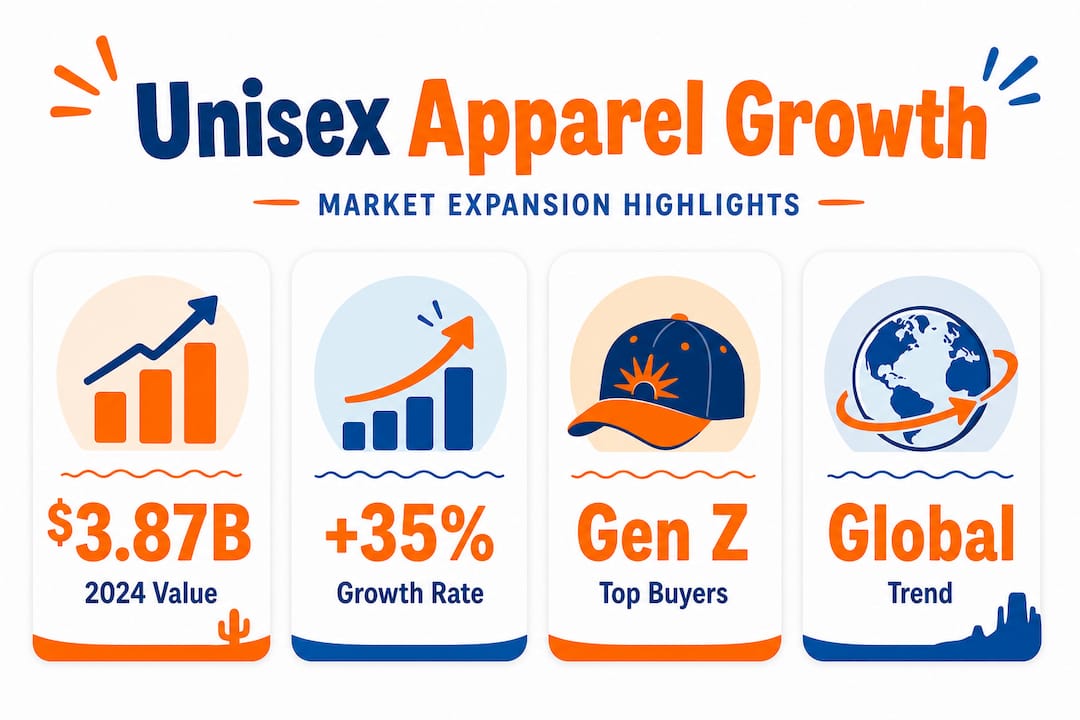
| Market metric | Conservative estimate | High-range estimate |
|---|---|---|
| Base year value | USD 3.87B (2024) | USD 50B (2023) |
| Projected value | USD 7.19B by 2030 | USD 110B by 2033 |
| Growth rate (CAGR) | 10.6% | 8.5% |
| Key growth drivers | Youth demand, sustainability | Cultural shifts, inclusivity |
Regardless of which figure you trust, the direction is clear. Unisex apparel is one of the fastest-growing segments in global fashion.
Modern interest in unisex apparel is driven primarily by Gen Z and Millennials prioritizing comfort and personal identity over traditional style rules. These two generations make up a growing share of global purchasing power, and their preferences are reshaping what brands produce and how they market it.
Here is what is driving the market right now in 2026:
- Youth culture and social media. Platforms like Instagram and TikTok have made personal style a public act, and unisex looks photograph cleanly and confidently.
- Sustainability awareness. Consumers increasingly prefer timeless pieces over fast fashion cycles, and unisex basics fit that lifestyle naturally.
- Local and regional identity. In places like Arizona, clothing is more than fashion. It is a statement about where you’re from and what you love. Desert tones, bold sun-bleached graphics, and breathable fabrics all connect to a specific sense of place.
- Shared wardrobes. Couples and friends increasingly share clothing, making unisex sizing practically useful, not just philosophical.
For Arizona residents especially, desert apparel trends show how the region’s climate and aesthetic naturally align with unisex sensibilities. Light fabrics, earthy colors like terracotta, rust, and sand, and graphic designs inspired by saguaro landscapes all translate beautifully into unisex pieces.
Browse a curated global unisex clothing selection to see how international designers are interpreting the category today.
How to wear and style unisex apparel
With unisex apparel more available than ever, here’s how you can style these pieces for confidence and local flair.
Building a solid unisex wardrobe doesn’t require starting from scratch. It starts with understanding which pieces act as foundations and which ones express personality. Unisex clothing examples like oversized blazers, relaxed trousers, minimalistic tees, hoodies, jeans, and jackets with simple designs and neutral colors form the backbone of most shared wardrobes.
Here is a step-by-step approach to styling unisex pieces with intention:
- Start with one signature piece. Pick a well-fitted unisex hoodie or a graphic tee that speaks to you. Build the outfit from that piece outward, rather than trying to coordinate an entire look at once.
- Layer with purpose. A relaxed unisex tee over a long-sleeve thermal creates texture and dimension without complicating the silhouette. In Arizona, layering works especially well in fall and winter mornings when temperatures can drop significantly.
- Choose complementary bottoms. Straight-leg or wide-leg pants work best with unisex tops. Avoid ultra-slim fits on the bottom if you’re wearing a relaxed top, as the proportions can feel unbalanced.
- Add accessories with personality. Unisex basics are a canvas. A bold hat, a woven tote, or a statement belt can make the same hoodie feel entirely different from one day to the next.
- Lean into local color. If you’re in Arizona, terracotta, warm beige, dusty sage, and deep rust tones all echo the landscape. Pairing a sand-colored unisex tee with rust-toned chinos or shorts creates a cohesive, regionally grounded look.
- Know your fit triggers. Some unisex pieces run long in the torso, short in the sleeve, or wide at the shoulder. Know which of those variations work for your frame, and shop accordingly.
For graphic tee inspiration that shows how Arizona-themed designs sit on unisex cuts, those examples demonstrate how bold artwork and comfortable silhouettes can coexist beautifully. You can also draw from Japanese unisex streetwear inspiration to see how minimalism and clean layering can elevate simple pieces into something striking.
Pro Tip: Mix one bold, statement piece, like a graphic hoodie with a desert landscape print, with two neutral basics. That ratio keeps your look cohesive and lets the signature piece do the talking without competing elements pulling attention.
The real world of unisex apparel: What most guides won’t tell you
Let’s move beyond the hype and look at what unisex apparel actually means for real people in real places.
Here’s the uncomfortable truth most unisex fashion guides skip over: a lot of unisex clothing is essentially menswear marketed more broadly. Harvard research confirms that unisex often leans masculine in adoption patterns, meaning the practical sizing and fit assumptions baked into many “unisex” designs still center a narrower range of body shapes than the label implies.
That doesn’t make unisex clothing bad. It makes it worth approaching with eyes open. When you buy a unisex piece, treat the label as a starting point, not a guarantee. Try it on, assess the fit honestly, and decide whether it works for your body, not for the idea of a universal body.
We also think there’s an underappreciated dimension to unisex dressing in specific regions like Arizona. The desert climate creates real, practical demands that generic unisex guides ignore completely. Fabric weight matters enormously when temperatures reach 110 degrees in Phoenix. A heavy cotton hoodie that feels perfect in a Brooklyn fall will be unwearable in a Scottsdale summer. Breathable ring-spun cotton, moisture-wicking blends, and lighter fleece weights are the unisex fabric choices that actually make sense in the Southwest.
The way unique regions influence trends is often more powerful than broader market forces. Arizona’s color palette, its outdoor lifestyle, and the pride its residents feel for the desert landscape push local unisex style in a distinct direction. Bold saguaro graphics, sun-faded tones, and relaxed silhouettes that breathe well aren’t just style choices. They’re practical responses to living here.
Our honest advice is this: don’t just follow the “unisex” tag. Experiment. Try pieces that are labeled outside your traditional category. Adjust proportions to your preference. Use accessories to personalize. Unisex apparel works best when you treat it as a foundation for personal expression, not a finished uniform. The label opens a door. You decide what to do once you walk through it.
Discover unisex style with Arizona Swag
If you’re ready to try unisex comfort for yourself, here’s an easy way to start building your next go-to wardrobe staples.
At Arizona Swag, we design with exactly this kind of wearable, confident style in mind. Our pieces are built for the desert. That means breathable fabrics, bold regional graphics, and relaxed silhouettes that work for every body and every occasion.
Our Gildan SF500 unisex hoodie is a customer favorite, offering a soft fleece construction that sits beautifully on a wide range of frames with Arizona-proud artwork that turns heads. For something with a slightly elevated feel, the Ring-Spun Cotton unisex hoodie delivers a buttery smooth finish in a relaxed silhouette that layers perfectly through Arizona’s cooler months. Both pieces show exactly what unisex apparel can be when it’s designed with intention and regional character.
Frequently asked questions
What is the difference between unisex, genderless, and gender-neutral clothing?
Unisex clothing prioritizes practical sizing and versatility across body types, while genderless and gender-neutral pieces specifically challenge cultural norms and traditional design cues. Think of unisex as function-first and genderless as philosophy-first.
Does unisex apparel actually fit everyone well?
While unisex clothing aims to fit a variety of body types, fit can still vary considerably, so personal adjustments or mindful selection are important. Intentional pattern engineering is required to avoid biases toward certain body types, and not every brand invests equally in that process.
Is unisex apparel just a trend or here to stay?
Unisex apparel is becoming a long-term fixture in fashion. Its roots in the 1960s hippie movement and consistent evolution into a modern industry standard driven by Gen Z and Millennials make it far more durable than a passing trend.
What are some popular unisex fashion items for 2026?
Best-sellers include hoodies, minimalistic tees, and relaxed-fit jeans. Common examples also include oversized blazers, relaxed trousers, and jackets with simple designs and neutral colors that transition easily across seasons and occasions.
Are unisex clothes more sustainable than traditional gendered pieces?
Many unisex designs promote sustainability by focusing on versatility and timelessness, reducing the need for separate production lines. Unisex apparel promotes inclusivity and sustainability through versatile, timeless designs that stay relevant across seasons rather than cycling in and out of trend.


