

TL;DR:
- Minimalist Arizona design emphasizes warm earth tones, natural textures, and intentional negative space rooted in desert culture. It responds to the climate with features like overhangs, thermal mass materials, and outdoor-indoor flow, creating functional, serene spaces. This style reflects environmental honesty and resists trends, emphasizing authenticity and a deep connection to place.
Minimalist Arizona design is not what most people picture when they hear the word “minimalism.” Forget cold white walls, bare concrete floors, and a single succulent on an empty shelf. What is minimalist Arizona design, really? It is a warm, grounded aesthetic that grows directly out of the desert’s terrain, light, and cultural identity. It uses earth-tone color palettes, natural tactile materials, and purposeful negative space to create homes that feel serene rather than sterile. This guide walks you through its origins, core principles, climate-driven adaptations, and how to bring this style into your own space with intention.
Table of Contents
- Key takeaways
- What is minimalist Arizona design and where it came from
- Core aesthetic principles of desert minimalist design
- How the desert climate shapes functional design choices
- Applying minimalist principles to interiors and landscaping
- Common misconceptions about Arizona minimalist design
- My honest take on why this style lasts
- Bring the desert home with Arizonaswag
- FAQ
Key takeaways
| Point | Details |
|---|---|
| Not cold, but warm | Arizona minimalism favors earth tones and textured materials, not stark white or clinical spaces. |
| Rooted in desert history | The style evolved from mid-century Desert Modernism into today’s warm, climate-responsive minimalism. |
| Function drives form | Every element, from roof overhangs to built-in storage, serves a clear purpose beyond decoration. |
| Nature is the blueprint | Landscape, light, and desert climate directly shape spatial choices and material selection. |
| Minimalism is a mindset | Authentic Arizona minimalism is a lifestyle of intentional subtraction, not a surface-level decorating trend. |
What is minimalist Arizona design and where it came from
To understand what minimalist Arizona design is today, you need to look at its roots in Desert Modernism. Beginning in the mid-twentieth century, architects working in the Sonoran Desert recognized that traditional East Coast or European design approaches simply did not suit the Arizona landscape. The heat was extreme. The light was intense. The terrain was raw and dramatic. Design had to respond to those realities.
Architects like Al Beadle and Paolo Soleri pushed a philosophy of forms that served climate and context. Frank Lloyd Wright’s Taliesin West in Scottsdale, completed in 1937, illustrated this thinking vividly. Wright used angular, low-profile structures built directly from desert materials, integrating stone and canvas to channel light and airflow rather than fight them. The architecture did not dominate the land. It belonged to it.
Key principles from that era included:
- Horizontal planes and flat rooflines that echoed the flat, expansive desert horizon
- Floor-to-ceiling windows that pulled the outside in without sacrificing shade
- Indoor-outdoor flow through covered terraces and open-plan living spaces
- Material honesty, using stone, concrete, and wood without decorative concealment
By the 2020s, that foundation had evolved into what designers now call Desert Minimalism or warm minimalism. The desert minimalism movement is defined by horizontal planes, flat rooflines, and floor-to-ceiling windows that blur the boundary between indoors and outdoors. The stark white that European minimalism favored was replaced by soft clay, warm taupe, and pale greige. Built-in storage reduced visual clutter. Architectural flow became the primary design language.
This evolution matters because it shows that minimalist Arizona design is not borrowed from Scandinavia or Tokyo. It grew from the specific pressures and gifts of the Sonoran Desert, and that origin gives it an authenticity that trends alone cannot manufacture.
Core aesthetic principles of desert minimalist design
The visual identity of this style is specific and deliberate. Once you know what to look for, you can spot it immediately. And once you understand why each choice is made, the whole system makes sense.
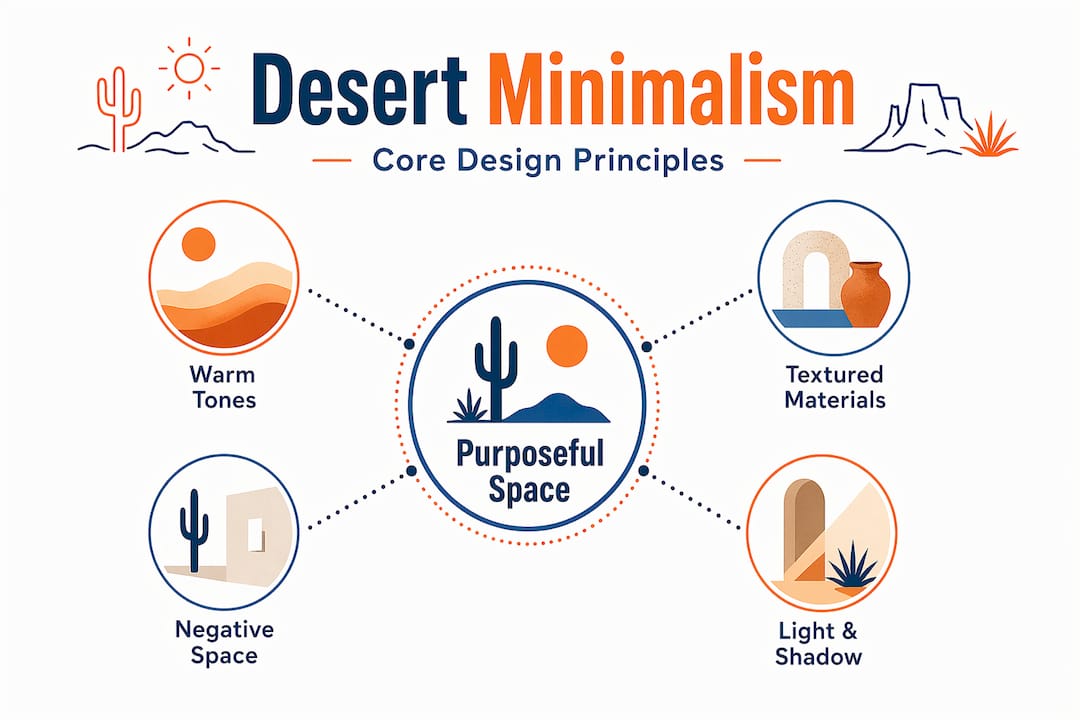
Color: warm instead of white
Warm minimalism avoids stark white interiors, favoring soft earth tones and tactile textures like plaster walls and slatted wood that make Arizona homes feel inviting rather than austere. Think soft clay walls, dusty terracotta floors, and warm sand-colored ceilings. These are not neutral choices made by default. They are direct references to the colors you see looking across the desert at golden hour.
Materials: texture over decoration
The material palette is where Arizona minimalist design separates itself from minimalism in other regions. Common choices include:
- Plaster walls in matte or slightly textured finishes that absorb and scatter light beautifully
- Rift oak cabinetry and furniture with clean, linear grain patterns
- Travertine and natural stone for flooring and accent surfaces
- Hammered concrete for countertops or outdoor walls
- Boucle, linen, and camel leather for upholstery that adds warmth without visual noise
Successful Arizona minimalist homes layer subtle tactile materials like rift oak and natural stone to achieve a casual yet refined feel, avoiding the cold sterility that trendy minimalism can produce. Texture is the decoration here. You do not need art on every wall when the wall itself has depth and warmth.
Negative space as a design tool
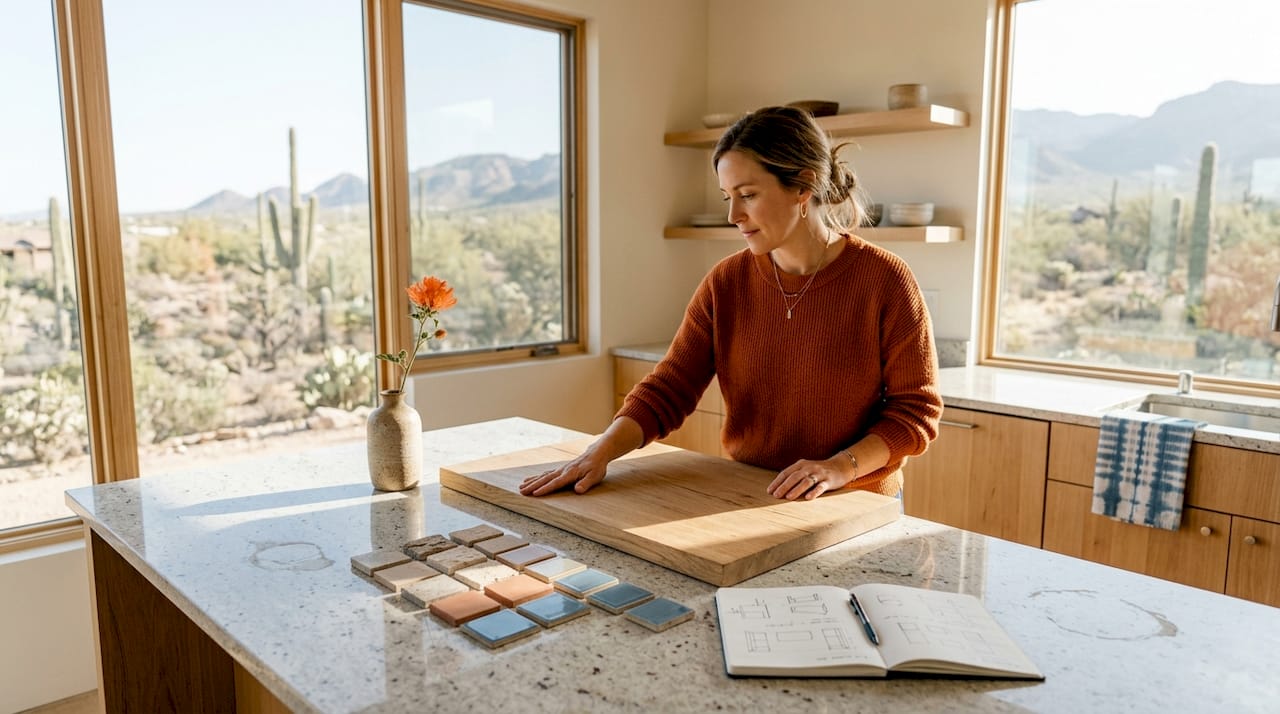
Minimalism is a decision framework, and negative space is an active element used to control attention, create hierarchy, and offer breathing room. In practical terms, this means leaving a wall bare so the window view becomes the focal point. It means using one sculptural side table instead of three decorative objects on a shelf. Space is not emptiness. It is where your eye rests.
Pro Tip: When furnishing a room in this style, try removing one item you were planning to include and observing whether the space feels more resolved. In Arizona minimalist design, restraint almost always improves the result.
Light and shadow as atmosphere
Arizona’s intense sunlight is both a challenge and a resource. Minimalist design here uses deep window reveals, slatted screens, and strategic overhangs to create dramatic shadow patterns that shift throughout the day. These moving patterns give rooms a living quality without any additional decoration.
How the desert climate shapes functional design choices
Minimalist Arizona design is not just beautiful. It is logical. Every major design decision in this style can be traced back to a functional response to the desert environment. That is what gives it integrity beyond visual style.
Here are the key climate-driven adaptations you will find in authentic Arizona minimalist homes:
-
Roof overhangs and solar shading. Extended overhangs block the high summer sun from entering south-facing windows while allowing lower winter sun to warm interior spaces passively. This reduces cooling loads without compromising the open, light-filled feel.
-
Central courtyards. Courtyards and roof overhangs moderate climate effects by encouraging natural ventilation and creating shaded outdoor living areas. A central courtyard draws cooler night air through the home and provides diffuse, indirect daylight that is far gentler than direct desert sun.
-
Thermally massive materials. Rammed earth walls, thick concrete, and stone absorb heat during the day and release it slowly at night. This natural temperature regulation has been used in desert building for centuries, and modern minimalist design incorporates it without making it visible.
-
Rusted steel and aged concrete. Desert design uses materials that age gracefully, like rusted steel and concrete, creating a sense of belonging within the desert environment rather than fighting it. These materials also require minimal maintenance, which aligns with the minimalist principle of reducing unnecessary effort.
-
Retractable glass walls. Sliding or folding glass systems open entire walls to shaded patios when temperatures allow, essentially doubling the living space during Arizona’s long, mild shoulder seasons. Open floor plans with strategic sight lines and minimal wall décor let architecture serve as the focal point while maximizing indoor-outdoor connection.
Pro Tip: If you are renovating an existing Arizona home rather than building new, focus on solar shading first. Adding a deep porch, pergola, or extended roofline to south and west exposures can cut interior temperatures noticeably and instantly improve how the space feels throughout summer.
Smart home technology fits naturally into this framework, too. Automated shading systems, radiant cooling, and whole-home energy monitoring allow modern Arizona minimalist homes to perform as efficiently as they look. Technology is incorporated invisibly, which keeps the aesthetic clean.
Applying minimalist principles to interiors and landscaping
Understanding the style is one thing. Knowing how to apply it is another. Here is how Arizona minimalist design translates from architectural concept into livable spaces.
Interior applications
The interior of an Arizona minimalist home prioritizes warmth, material depth, and functional clarity. You will not find overstuffed furniture, busy pattern mixing, or decorative clutter. Instead, you will find:
- A sofa in natural linen or boucle positioned to face the best view
- A single piece of desert-inspired artwork or woven textile as the wall’s focal point
- Built-in cabinetry in rift oak or painted plaster that hides storage completely
- A stone or concrete fireplace as an architectural anchor in the living space
- Accent colors used sparingly, perhaps a single terracotta vessel or a deep indigo pillow
The furniture itself tends toward clean geometry. Low profiles, simple legs, and honest joinery. Decorative excess has no place here. Every object you choose to include should have either a functional purpose or a genuine emotional resonance.
Each design element should serve a clear, purposeful function rather than exist purely as decoration. That principle applies equally to a coffee table and a chandelier.
Minimalist landscaping in Arizona
Outdoors, the same restraint applies. Minimalist gardening in Arizona emphasizes drought-tolerant plants, limited plant choices, and hardscape elements like gravel and stone to create elegant, sustainable desert landscapes. You are not eliminating life from the garden. You are editing it the same way you edit a room.
| Element | Conventional Landscaping | Arizona Minimalist Landscaping |
|---|---|---|
| Plant variety | Many species, layered and dense | Three to five carefully chosen natives |
| Ground cover | Lawn or mixed ground cover | Decomposed granite or river rock |
| Water use | Irrigation-heavy | Drip systems for natives only |
| Hardscape | Decorative pavers or busy tile | Simple concrete, natural stone, or rammed earth |
| Focal point | Multiple garden features | One specimen plant or water element |
A single mature saguaro cactus positioned against a plaster wall creates more visual impact than a dozen smaller plants competing for attention. That is the core logic at work. Water conservation and low maintenance are key benefits of this approach, using native plants and simple water features for subtle impact.
Common misconceptions about Arizona minimalist design
A lot of people get this style wrong, and it is usually for the same reasons. Let us clear those up.
The most common mistake is treating negative space as failure. Designers and homeowners feel uncomfortable with emptiness and fill it instinctively. In Arizona minimalist design, that impulse works against you. Space is intentional. It gives your eye somewhere to rest and lets the materials and architecture speak.
The second mistake is equating minimalism with cold. Cold white walls, chrome fixtures, and polished concrete without warmth are not minimalist Arizona design. They are a different style that happens to be simple. True Arizona minimalism balances simple massing with elevated amenities and layered tactile materials, achieving a casual yet refined aesthetic that feels genuinely comfortable.
A few other pitfalls worth knowing:
- Copying superficial elements without functional clarity produces bland spaces. You need the architecture and the objects to work together logically.
- Choosing trendy colors instead of genuinely earthy, place-specific tones undermines authenticity. Sage green is not the same as warm greige.
- Skipping built-in storage forces visible clutter, which defeats the entire purpose.
- Adding too many accent pieces in the name of “warmth” creates visual noise that erases the serene quality you are working toward.
“Copying superficial elements without understanding functional clarity results in bland spaces rather than true minimalism.” — Minimalism in Design: Complete Expert Guide
Minimalism, in the Arizona sense, is a lifestyle choice as much as a design choice. It asks you to be deliberate about what you bring into a space and why. That discipline is what separates a genuinely minimalist Arizona home from one that just looks like it is missing furniture.
My honest take on why this style lasts
I have spent a lot of time thinking about why warm minimalism in Arizona holds up over the long term when other design trends fade quickly. My honest answer is that it is not really a trend at all. It is an appropriate response to a specific place.
What I have noticed, in watching clients engage with this style, is that the homes that feel most successful are the ones where the designer truly understood the landscape first. The good ones start outside and work inward. They study how light enters the site at different times of year before deciding where to place a window. They choose materials that will weather with dignity rather than requiring constant upkeep.
In my experience, the mistake most people make when trying to adopt this style is they start with mood boards instead of site analysis. They see a beautiful plaster wall on a design blog and want to replicate it without understanding why that wall works in that specific context. Warm minimalism in Arizona is not transferable as a surface treatment. It works because every element is rooted in place.
What I find genuinely appealing about this style is the honesty of it. There is nothing pretending to be something it is not. Rammed earth looks like rammed earth. Stone looks like stone. That material honesty is rare in modern design, and it is part of why these spaces age so beautifully.
If you are just starting to explore this design philosophy, my suggestion is simple: spend time in the desert first. Walk through it. Notice the color of the soil, the texture of rock formations, the way shade falls across a hillside. Let that be your palette and your guide before you pick a single paint color or buy a single piece of furniture.
— Trevor
Bring the desert home with Arizonaswag
If this style resonates with you, the good news is that the Arizona minimalist aesthetic extends well beyond your walls. At Arizonaswag, we believe that the same values behind great desert design, authenticity, restraint, and a deep connection to place, translate beautifully into wearable form.

Our collections are shaped by Arizona’s landscape and culture, from the warm terracotta tones of the Sonoran Desert to the clean, geometric spirit of Desert Modernism. Whether you are drawn to the understated or you want something that makes your love for this state unmistakable, you will find it here. Explore how Arizona’s landscape shapes the apparel we design, or discover desert inspired clothing that captures the spirit of this place without overthinking it. Browse the full collection at Arizonaswag and find something that feels genuinely Arizona.
FAQ
What exactly is minimalist Arizona design?
Minimalist Arizona design is a warm, climate-responsive aesthetic that combines Desert Modernism’s architectural principles with earth-tone palettes, natural materials, and purposeful negative space. It prioritizes function, material honesty, and a strong connection to the desert landscape.
How is Arizona minimalism different from Scandinavian minimalism?
Arizona minimalism uses warm earth tones like soft clay, taupe, and terracotta instead of cool whites and grays. It also responds directly to desert climate conditions through roof overhangs, thermal mass materials, and indoor-outdoor living spaces that Scandinavian minimalism does not address.
What colors are typical in minimalist Arizona interiors?
The typical palette includes soft clay, warm taupe, pale greige, dusty terracotta, and warm sand tones. Accent colors like deep indigo or muted rust appear sparingly to add depth without disrupting the overall calm and cohesion of the space.
Can you apply minimalist Arizona design on a budget?
Yes. Start with decluttering and editing what you already own. Repaint walls in warm, matte earth tones and swap out chrome or polished fixtures for brushed brass or matte black. Add a single piece of natural-fiber textiles like linen or a woven wool throw to bring warmth without significant cost.
What plants work best in a minimalist Arizona garden?
Drought-tolerant natives like saguaro, agave, palo verde, and brittlebush are ideal. Minimalist Arizona landscaping keeps plant variety limited to three to five species, using decomposed granite or river rock as ground cover to maintain a clean, elegant, and low-maintenance outdoor space.


