

TL;DR:
- Designing Arizona-inspired clothing requires authentic cultural research, landscape inspiration, and community collaboration.
- Respectful use of motifs involves understanding their origins, obtaining community approval, and crediting sources.
- Testing designs through feedback ensures cultural sensitivity, aesthetic appeal, and wearability before mass production.
You’re standing in front of your closet, wanting something that says Arizona without looking like you grabbed a souvenir off a gas station rack. You want the warmth of terracotta sunsets, the boldness of Saguaro silhouettes, and the energy of Phoenix streetwear, all in one outfit that actually turns heads. That challenge is real, and it’s one that fashion-forward designers and wearers face every time they try to capture regional identity authentically. The design process for regional outfits starts with researching cultural context, history, motifs, and local lifestyle, and this guide walks you through every step, from gathering inspiration to testing your final look.
Table of Contents
- Preparing for design: Know your region and gather inspiration
- Steps to designing your regional outfit
- Staying respectful: Cultural appreciation versus appropriation
- Testing your design: Authenticity, satisfaction, and feedback
- What most designers miss: Why embracing collaboration and context is key
- Design your own Arizona-inspired look
- Frequently asked questions
Key Takeaways
| Point | Details |
|---|---|
| Understand your region | Start with deep research on local culture, history, and motifs before sketching any ideas. |
| Blend old with new | Balance traditional elements and contemporary trends for authentic style with broad appeal. |
| Respect origins | Work alongside local communities and credit sources to ensure your designs are respectful. |
| Seek real feedback | Validate design authenticity and appeal through expert, peer, and audience reviews. |
Preparing for design: Know your region and gather inspiration
With the importance of authenticity established, let’s explore how to prepare and draw inspiration for your regional outfit design. Before you sketch a single line or choose a single fabric swatch, you need to understand what Arizona actually is. Not just its postcards, but its living, breathing culture.
Understanding Arizona’s cultural roots
Arizona’s style identity comes from a rich collision of worlds. The state holds 22 federally recognized tribes, each with distinct artistic traditions rooted in pottery, weaving, beadwork, and ceremonial dress. Spanish colonial history introduced silver jewelry and embroidered textiles. Mexican border culture brought vivid embroidery patterns and warm, saturated earth tones. And the modern Phoenix and Tucson urban scenes have layered streetwear and boho-western aesthetics on top of all of it.
Understanding how Arizona’s landscape influences apparel is just as important as studying its history. The desert itself shapes design choices. Terracotta, rust, sage green, burnt orange, sandy beige, and deep turquoise are not arbitrary color choices. They mirror the Sonoran Desert’s palette at different hours of the day. Even fabric weights and breathability choices connect to the climate.
Where to gather authentic inspiration
The research process for regional outfits includes interviews, observation, and analysis of cultural contexts, and Arizona gives you rich material to work with. Here are the most valuable sources:
- Museum collections. The Heard Museum in Phoenix and the Arizona State Museum in Tucson offer extensive collections of Indigenous textiles, pottery patterns, and ceremonial objects. These are primary sources for motifs.
- Local festivals and markets. Events like the Tucson Gem and Mineral Show, Native American festivals, and First Friday art walks in Phoenix show you how contemporary Arizona residents actually dress and express identity.
- Style blogs and community accounts. Arizona-based creators on Instagram and TikTok document real, current fashion influenced by desert living. These reflect living trends rather than archived history.
- Outdoor exploration. Walk through Saguaro National Park, Monument Valley, or the Painted Desert. Notice how colors shift across sandstone, sky, and vegetation. These firsthand observations inform truly authentic palettes.
- Community conversations. Talk to local artists, weavers, and designers. Their lived experience shapes motifs in ways that no book can replicate.
Pairing history with current Arizona fabrics and trends gives your designs both depth and relevance. You’re not just referencing the past. You’re building something that fits the present moment.
| Inspiration source | What it offers | Best use |
|---|---|---|
| Museum collections | Authentic motifs and textile history | Pattern and symbol research |
| Local festivals | Real-time fashion behavior | Trend identification |
| Style blogs | Urban and boho-western styling | Modern wearability |
| Outdoor exploration | Color and texture from the landscape | Palette development |
| Community interviews | Living cultural context | Storytelling and ethics |
Pro Tip: Before you finalize any motifs or symbols in your design, share early sketches with community members or cultural representatives. Early feedback prevents costly missteps and builds trust with your audience.
Steps to designing your regional outfit
Now that your creative groundwork is done, it’s time to turn that inspiration into tangible designs. The process moves through several clear phases, and each one builds on the last.
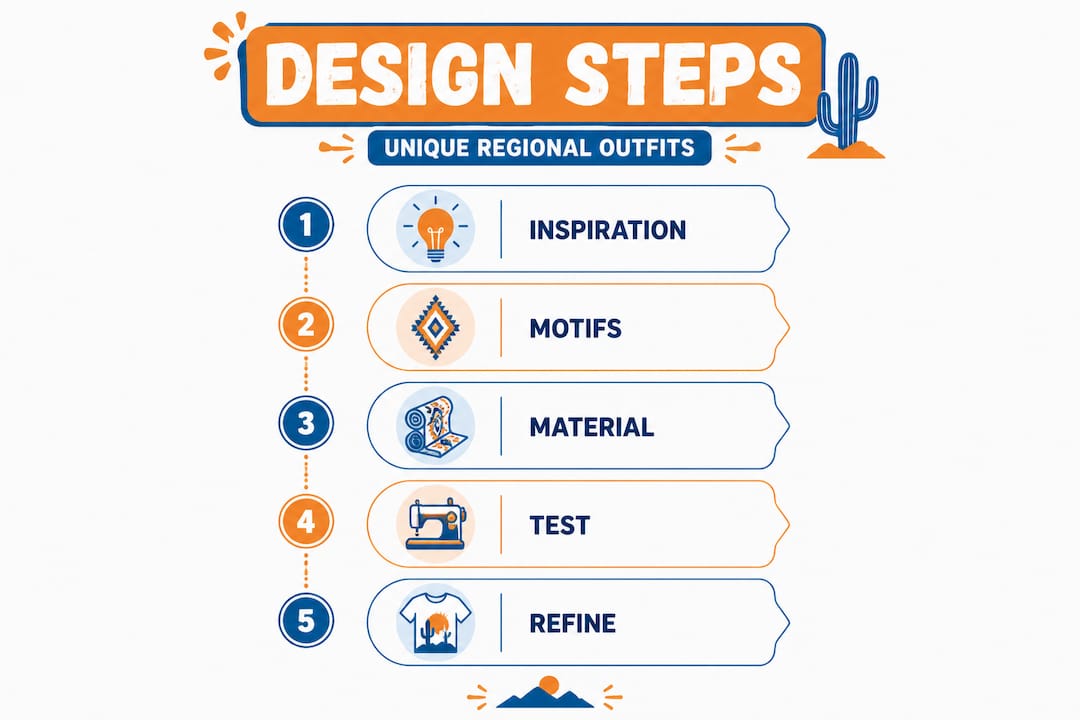
Step-by-step: From concept to prototype
-
Define your design story. Every great regional outfit starts with a clear statement. Ask yourself: what part of Arizona am I channeling? A desert sunrise? The neon energy of downtown Phoenix? A traditional Navajo weaving pattern reimagined for a hoodie? Your story guides every decision that follows.
-
Sketch initial motifs and silhouettes. Start loose. Pull your museum notes, your landscape photos, and your festival observations together. Sketch geometric shapes inspired by pottery patterns, organic forms from desert plants like the Ocotillo or Palo Verde, or graphic color blocks that echo cliff formations. Don’t refine yet. Capture as many ideas as possible.
-
Select your color palette. Arizona’s palette is earthy, warm, and vivid in equal measure. Terracotta, turquoise, bone white, deep rust, and dusty sage are classic anchors. For a more modern, streetwear-forward feel, you might pair these with charcoal or off-black to ground the brighter tones. Consider how apparel shapes regional identity and let your palette tell a story about the specific corner of Arizona you love most.
-
Choose fabrics that suit the climate and the vision. Lightweight cotton blends are ideal for desert heat. Soft brushed fleece works for the surprisingly cold Arizona winters. For a premium feel, look at structured twill for caps or canvas for totes. Natural materials read as authentic and feel better against skin in warm environments.
-
Develop a mood board. Gather your sketches, fabric swatches, and color references into a single visual space. This is where you spot tensions and harmonies. You might realize your turquoise is competing with your rust instead of complementing it, or that your silhouette is too traditional for a streetwear audience.
-
Refine your motifs and layout. Now tighten your sketches. Decide which motifs lead and which support. A bold Saguaro graphic might anchor a t-shirt, while smaller geometric patterns serve as border details on sleeves or necklines.
-
Create a prototype. Whether you’re working with a manufacturer, a local printer, or a sample seamstress, get a physical version made before committing to production. Wear it. Move in it. Show it to people who know Arizona.
Arizona case study: Boho-western meets streetwear
One of the most exciting directions in contemporary Arizona design is the fusion of boho-western aesthetics with urban streetwear. Think oversized hoodies in terracotta with hand-drawn Saguaro graphics. Or wide-leg trousers in a desert-tan twill paired with beaded accessories. This blend speaks to the millennial and Gen Z audience that grew up between Phoenix suburbs and wide-open desert highways.
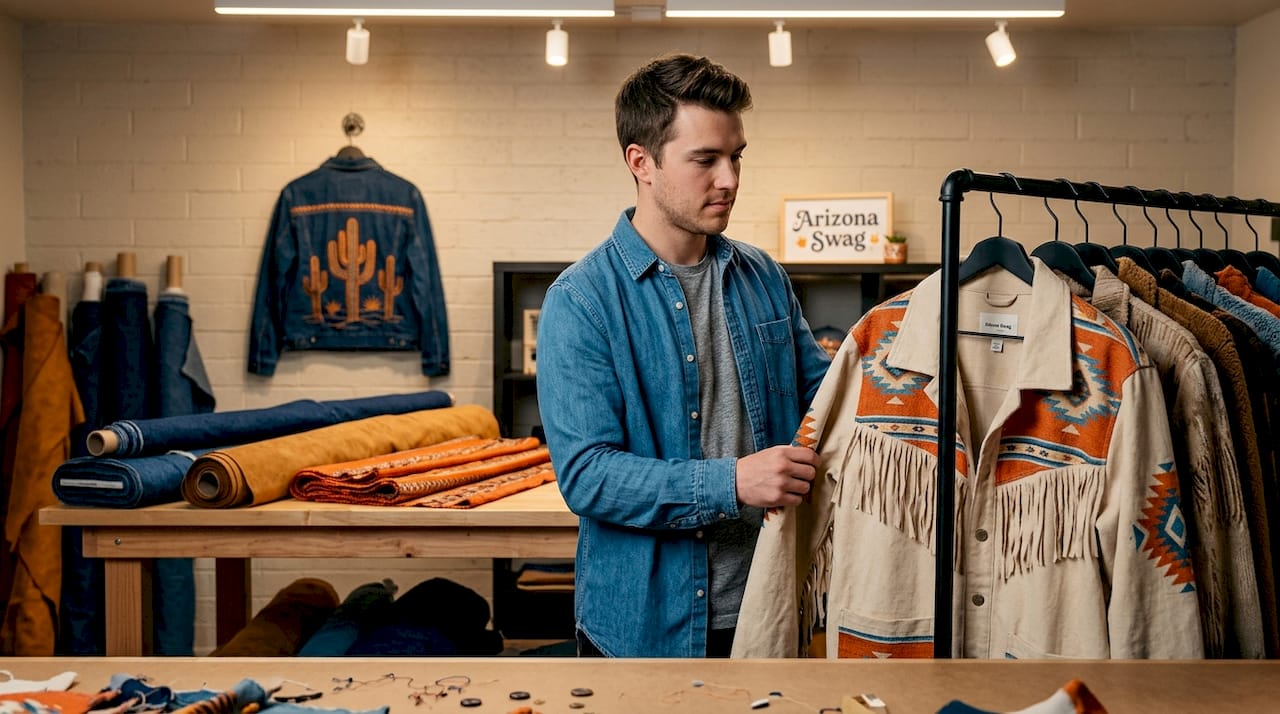
The influence of designers like Loren Aragon shows how deep this tradition can go. Aragon’s ACONAV label fuses Acoma Pueblo pottery patterns and matrilineal heritage with silk and leather couture, proving that Indigenous motifs translated thoughtfully can reach the highest levels of fashion without losing their meaning. That raises the standard for all regional designers and challenges the idea that “Arizona-inspired” needs to mean generic.
Think about how regional apparel shapes tourism and identity. People who visit Arizona bring pieces home as wearable memories. People who live here wear their pride. Both audiences respond to designs that feel genuinely rooted.
| Approach | Traditional | Modern fusion |
|---|---|---|
| Motifs | Exact ceremonial symbols | Abstracted or reinterpreted geometric forms |
| Fabrics | Hand-woven wool, natural dyes | Cotton blends, soft fleece, premium twill |
| Silhouettes | Culturally specific cuts | Oversized, streetwear-influenced shapes |
| Color palette | Historically accurate hues | Desert-inspired with contemporary neutrals |
| Audience | Cultural communities | Millennials, Gen Z, fashion-forward travelers |
The sweet spot lives between these two columns. You want enough tradition to feel authentic and enough modernity to feel wearable in everyday life.
Staying respectful: Cultural appreciation versus appropriation
With your design taking shape, it’s crucial to avoid common ethical mistakes and respect the origins of your inspiration. This is the step that separates thoughtful designers from careless ones.
“Knowing where a symbol comes from and what it means is not optional. It’s the foundation of respectful design.” Regional fashion done right honors living communities, not just historical aesthetics.
Understanding the line
Cultural appreciation means you’ve done the work. You’ve studied the origins of the motifs you’re using, you’ve engaged with the communities those motifs come from, and you’ve found ways to reference and reinterpret without misrepresenting. Cultural appropriation, by contrast, takes sacred or meaningful symbols and flattens them into decoration without acknowledgment or credit.
For Arizona-inspired design, this distinction matters because the state’s Indigenous communities are present, vocal, and protective of their cultural heritage. Using a Navajo-style pattern without understanding its origin or credit is appropriation. Collaborating with a Navajo artist, properly licensing their work, and telling the story of that collaboration openly is appreciation.
The key steps for authentic Arizona designs that walk this line responsibly include:
- Study the symbol’s origin before using it. Not just its visual appearance, but what community uses it, in what context, and whether it holds sacred or ceremonial significance.
- Consult and collaborate with members of the relevant cultural community. This can mean paying for artistic consultation, entering a licensing agreement, or simply reaching out and listening.
- Credit openly. Your garment tags, your website, your social posts should name the inspiration. Transparency builds trust and educates your audience.
- Adapt thoughtfully. There’s a difference between copying a sacred pattern exactly and creating an abstracted, desert-geometric pattern inspired by the broader visual language of the Southwest. The former is risky. The latter, done with acknowledgment, can be meaningful.
- Be open to feedback. If a community member tells you that a specific element in your design is not appropriate to use, take that seriously. Adjust and improve.
Balancing cultural appreciation versus appropriation while adapting traditional elements for a millennial streetwear audience is possible when you do the work upfront. Arizona boho-western hoodies and desert-themed graphic tees can honor the region’s culture while remaining fresh and wearable.
Pro Tip: Add a small card or tag to your finished garment that shares a short story about your design inspiration. Mention the cultural reference, the community you engaged with, or the landscape that shaped your color choices. This turns a piece of clothing into a conversation starter.
Testing your design: Authenticity, satisfaction, and feedback
The final step is ensuring your design is valued by its intended audience and seen as both impressive and authentic. You’ve done the research, made the prototype, and now it’s time to find out what people actually think.
Why testing matters
Many designers skip this phase or treat it as optional. It isn’t. Testing your regional outfit design protects you from launching something that misses culturally, aesthetically, or in terms of basic comfort and fit. Research on design validation confirms that testing for authenticity and satisfaction through surveys and expert validation on aesthetics, cultural representation, and innovation significantly improves final product quality and audience approval.
How to gather meaningful feedback
-
Run a short online survey. Share your prototype images with a targeted audience of Arizona fashion enthusiasts, locals, or cultural community members. Ask specific questions: Does this feel like Arizona? Does it feel respectful? Would you wear it? What would you change?
-
Request expert review. Connect with a local fashion blogger, a cultural historian, or an Indigenous artist who can evaluate your design from a knowledgeable perspective. Their feedback carries weight and specificity that general audience surveys may miss.
-
Conduct test wears. Have two or three real people wear the garment in actual Arizona conditions. Walk around Old Town Scottsdale, attend a First Friday art event, or just wear it during a regular day in Phoenix. Notice what sparks conversation, what draws compliments, and what feels uncomfortable after a few hours.
-
Observe social response. Post your prototype images on Instagram or TikTok and pay attention to comments. Are people saying “that’s so Arizona”? Are they asking where to buy it? Are there any comments that flag cultural concerns? Real-time social feedback is fast and revealing.
-
Refine and retest. Use the feedback to make specific improvements. Adjust a color that wasn’t landing. Simplify a motif that read as too busy. Fix a fit issue that came up in test wears. Then share the revised version with a second round of reviewers.
| Feedback method | Key benefit | Best for |
|---|---|---|
| Online survey | Quick, broad data | Aesthetic and cultural resonance |
| Expert review | Deep, specific critique | Cultural accuracy and innovation |
| Test wear | Real-world comfort and fit data | Wearability and lifestyle alignment |
| Social media post | Fast, high-volume response | Trend appeal and marketability |
| Community review | Cultural validation | Ethical integrity and authenticity |
Final refinement checklist
Before you call a design finished, run through these questions:
- Does the color palette authentically reflect Arizona’s desert landscape?
- Are all motifs properly researched, credited, and used appropriately?
- Does the garment feel comfortable in warm weather or the intended season?
- Would someone in Arizona be proud to wear this outside?
- Does the design communicate a clear, specific story or place?
Reading shopping tips for style and quality alongside your own design process can help you see what well-executed Arizona apparel looks like from a buyer’s perspective. That outside view sharpens your own design instincts.
What most designers miss: Why embracing collaboration and context is key
Here’s something the design tutorials rarely say out loud. Most people building “regional” clothing get stuck on the visual layer. They find a motif, they like how it looks, they put it on a shirt. Done. But that approach produces forgettable work, and sometimes harmful work, because it treats culture as a costume rather than a living conversation.
The designers who create truly standout regional fashion understand that motifs are not the culture. They’re a representation of it. The real culture lives in the stories, the relationships, the practices, and the people. When you design a hoodie inspired by Arizona, the question isn’t just “does this look like the desert?” It’s “does this feel like it was made by someone who actually listened?”
Loren Aragon’s work with ACONAV demonstrates what happens when a designer goes deep rather than wide. His pieces translate Acoma Pueblo pottery motifs into couture silhouettes in silk and leather, with each garment rooted in matrilineal heritage and family story. The result isn’t just beautiful. It’s irreplaceable. You can’t reproduce it without reproducing the life behind it.
That level of depth is a standard worth aspiring to, even if your goal is a graphic tee rather than a couture gown. It means spending time in community before spending time at your sketchbook. It means letting the people of Arizona shape your creative risk-taking rather than just validating your existing ideas.
The practical takeaway is simple. If you want designs that genuinely resonate with fashion-forward Arizonans, and not just tourists looking for a souvenir, go deeper than the image. Learn the Arizona streetwear scene from the inside out. Talk to the people making it. Let that context show up in your choices, your credits, and your storytelling. The clothes that do this become more than apparel. They become wearable identity.
Design your own Arizona-inspired look
Ready to put these steps and insights into real practice? Building your own Arizona-inspired wardrobe doesn’t have to start from scratch. At Arizona Swag, we’ve done the research, the cultural groundwork, and the design refinement so you can wear Arizona authentically from day one.
Our collection of desert-themed t-shirts, hoodies, hats, and totes brings together bold Saguaro graphics, earthy desert palettes, and premium streetwear comfort in pieces built for real Arizona life. Every design reflects the landscape, culture, and spirit that makes this state unlike anywhere else. Whether you’re looking for a starting point for your own design journey or simply want a standout piece that captures that unmistakable Arizona feeling, our family-owned shop is your go-to source. Browse the full collection at Arizona Swag and find your next favorite piece of wearable regional art.
Frequently asked questions
What defines a regional outfit?
A regional outfit uses local history, motifs, and cultural elements to express identity and style unique to a particular area, grounding fashion in a specific sense of place and community.
How do I avoid cultural appropriation when designing?
Learn the origins of symbols, collaborate with local communities, and always credit your sources to ensure your work is genuine appreciation rather than surface-level borrowing.
What are popular Arizona-inspired fabrics or colors?
Earthy tones like terracotta, rust, sage green, and turquoise paired with breathable cotton or soft fleece are the foundation of authentic Arizona desert style.
How can I test if my design resonates with locals?
Use online surveys, seek feedback from Arizona fashion communities, and observe social and expert responses to gauge both aesthetic appeal and cultural authenticity before finalizing your design.
Can I mix regional motifs with streetwear trends?
Absolutely. Many designers successfully blend streetwear and regional styles especially through Arizona boho-western hoodies and desert graphic tees that speak directly to millennial and Gen Z audiences looking for authentic self-expression.


